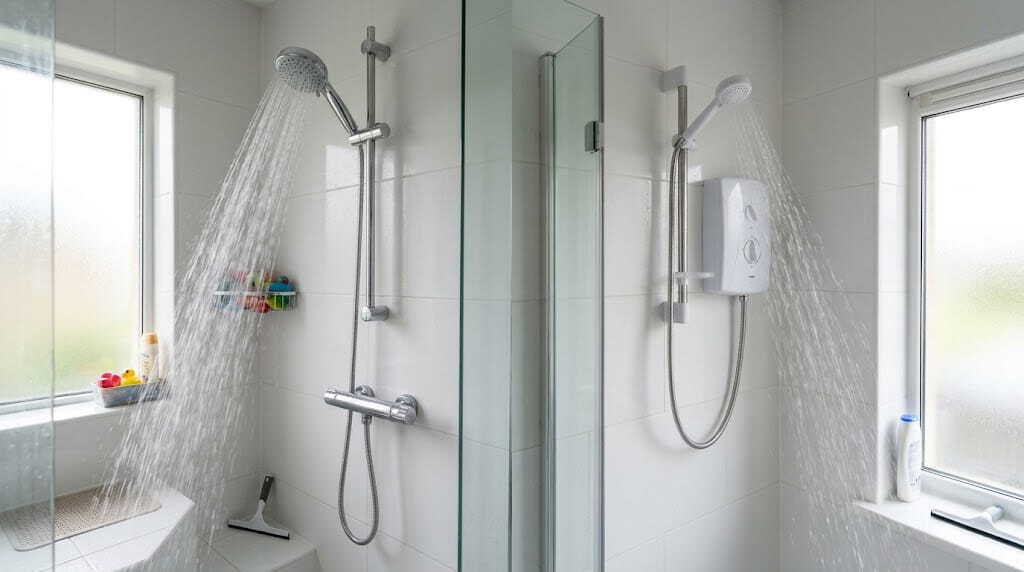
For most Irish homes, the power shower vs electric shower decision comes down to your water system. A power shower suits a house with a hot water cylinder and a cold water tank in the attic. It gives the stronger flow of the two.
An electric shower suits almost any home with a cold mains supply. It heats water as you use it, so it keeps working when the immersion is off or the tank is empty. The trade-off is that it needs its own heavy-duty circuit from the fuse board.
This guide looks at the choice from the electrician’s side of the job. It covers which homes suit each shower, what the wiring involves, and the cases where neither one is the right answer.
What Is the Difference Between a Power Shower and an Electric Shower?
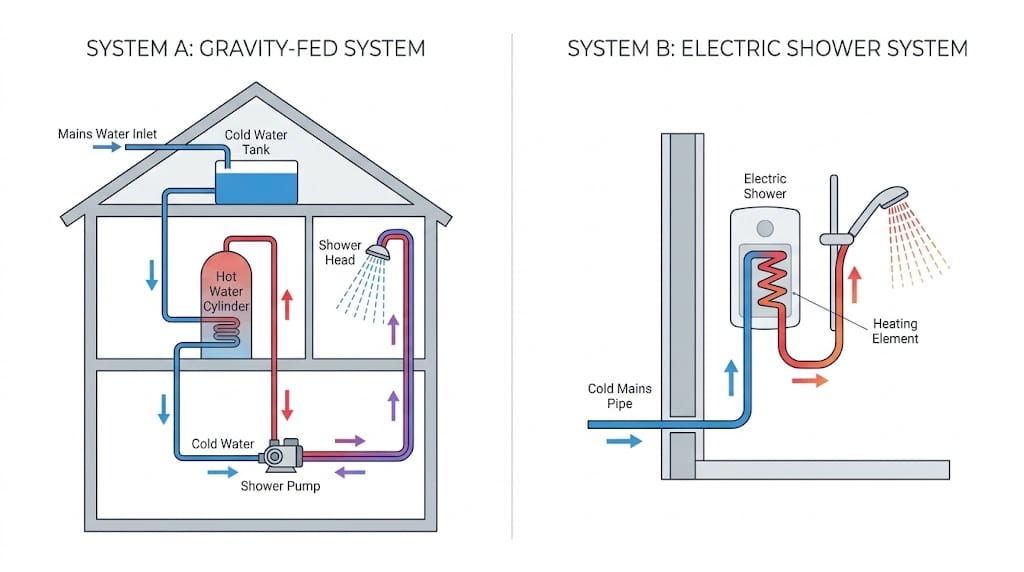
A power shower boosts stored water, while an electric shower heats its own. A power shower uses a pump to raise the pressure and flow of hot and cold water already stored in your home. An electric shower takes cold mains water and heats it instantly as it passes through.
That single difference drives everything else. It decides which homes each shower suits, how much water it uses and how much electrical work it needs.
- Power shower. Mixes hot water from your cylinder with cold water from the tank, then pumps it to the head.
- Electric shower. Uses only the cold supply and a heating element inside the unit.
- Electricity use. A power shower only needs power to run its pump. An electric shower needs a high electrical load to heat the water, which is why it usually requires a dedicated high-amperage circuit.
Which Irish Homes Suit a Power Shower?
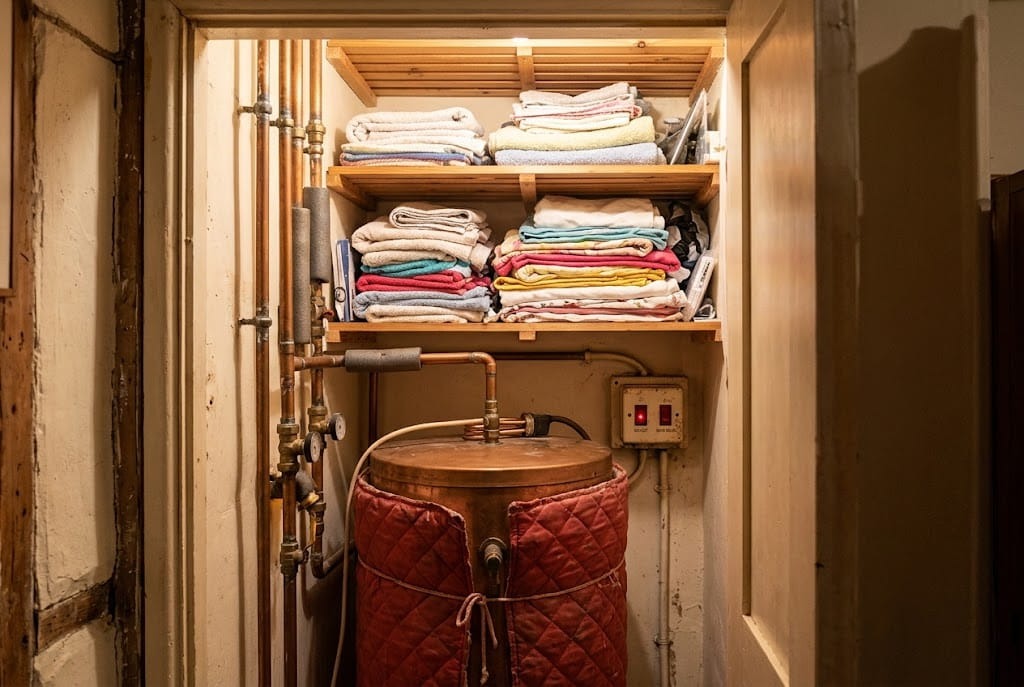
A power shower suits homes with a gravity-fed system, meaning a cold water tank in the attic and a hot water cylinder in the hot press. Gravity alone gives weak pressure in these homes, and the pump fixes that. It’s common in older Irish houses where the plumbing has never been converted to mains pressure.
It’s the wrong choice in two situations.
- Combi boiler homes. Power showers only work with tank-fed hot and cold water. They can’t be used with direct mains-fed water or a combi boiler.
- Homes without reliable hot water. A power shower can only deliver what’s in the cylinder. A large household showering back to back can run it dry, and then everyone waits for the tank to reheat.
If you have the tank-fed setup and plenty of stored hot water, a power shower gives the most satisfying flow.
Which Irish Homes Suit an Electric Shower?
An electric shower suits homes that want hot water on demand without heating a full tank. It only needs a cold mains feed and a suitable electrical supply. That makes it the usual choice for ensuites, second bathrooms, apartments and older homes where running new hot water pipework would mean lifting floors.
It also works well in homes where the main heating is off for long stretches in summer. You get a hot shower without switching on the immersion for an hour.
The main limits are flow and water hardness.
- Flow. An electric shower can only heat so much water at once, so its flow is gentler than a power shower’s.
- Limescale. In many parts of Ireland, limescale builds up on the heating element over time and reduces efficiency. Hard water areas should expect to descale the head and keep an eye on the unit’s performance.
Power Shower vs Electric Shower Compared Side by Side
The right shower depends on your water system first, then on flow, running cost and wiring. Comparing the two on the same points makes the trade-offs clear before you price anything.
- Water source. A power shower needs a hot cylinder and a cold tank. An electric shower needs only a cold mains feed.
- Flow strength. A power shower gives the stronger, fuller spray. An electric shower is gentler, especially in winter when the incoming water is colder.
- Hot water availability. A power shower stops when the cylinder runs out. An electric shower keeps heating for as long as you run it.
- Water use. A power shower uses more water per minute, and more of that water has already been heated.
- Electrical work. A power shower needs a supply for a small pump. An electric shower needs a dedicated circuit with heavier cable and its own protection at the fuse board.
- Combi compatibility. A power shower won’t work with a combi boiler. An electric shower doesn’t depend on the boiler at all.
Cost depends on the unit, the bathroom layout and whether the circuit is already in place. Our guide to electric shower installation cost breaks down what moves the price on the electrical side.
What Electrical Work Does an Electric Shower Need?
An electric shower needs its own dedicated circuit from the fuse board, sized to the shower’s kW rating. It can’t s
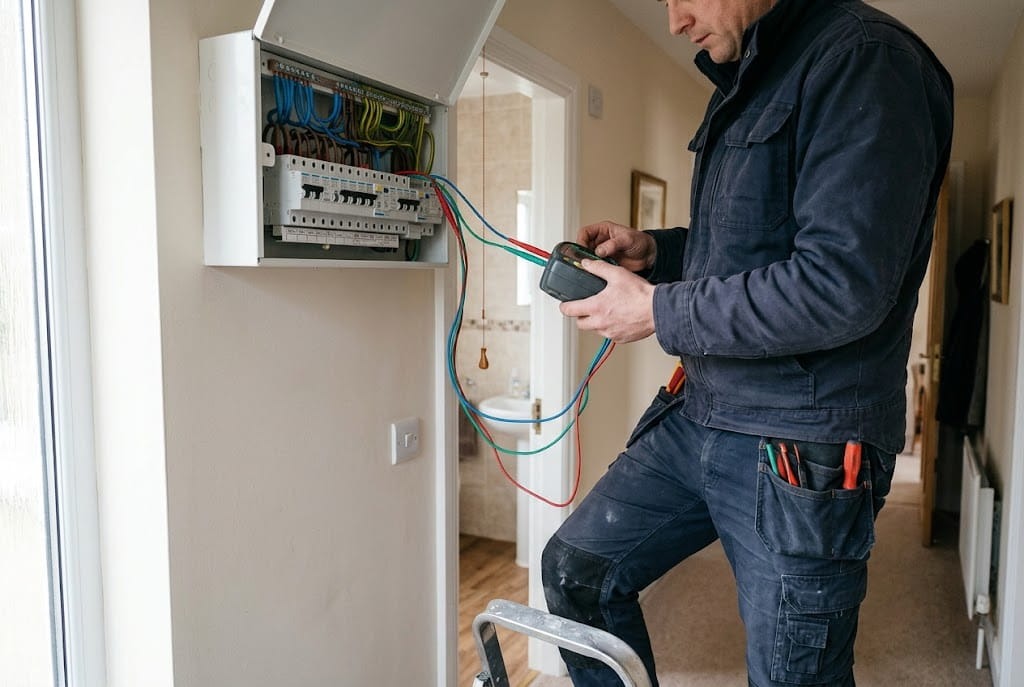
hare a socket ring, a spur or a lighting circuit. The circuit also needs the correct cable, circuit protection and a double-pole isolating switch, usually a ceiling pull cord, outside the shower area.
This is where most electric shower jobs are won or lost. The shower itself is the easy part. The circuit behind it is what keeps it safe.
Electric Shower kW Ratings and What They Mean for Flow
A higher kW rating gives a stronger flow at the same temperature. Electric showers are typically rated from 7.5kW up to 10.5kW, and a 10.5kW unit can deliver about 50% more flow than a 7.5kW one.
The catch is that a bigger shower draws more current. Triton’s guidance on shower power ratings shows a 7.5kW shower on a 32A breaker with 6mm² cable, while a 10.5kW shower needs a 45A breaker and 10mm² cable.
So you can’t simply swap a 7.5kW unit for a 10.5kW one on the same wiring. The cable, the breaker and often the RCD or RCBO protection need checking first.
Fuse Board Capacity for a New Electric Shower Circuit
Your fuse board needs a spare way and enough capacity to carry the shower’s load. Manufacturer instructions ask installers to check that the consumer unit has a main switch rated at 80A or above and a spare way for the shower’s breaker.
Older boards often fall short in one of these ways.
- No spare way for a new circuit breaker.
- Old rewireable fuses with no modern RCD protection.
- A low-rated main switch that can’t safely handle a big shower alongside the cooker and immersion.
If any of these apply, it’s usually time to upgrade the fuse board before the shower goes in. Doing both together costs less than two separate visits.
When Neither a Power Shower nor an Electric Shower Is the Right Fit
If your home has a combi boiler or a pressurised hot water system, a mixer shower is often a better choice than either. A mixer blends hot and cold water already at mains pressure, so it needs no pump and no high-load circuit. Many newer Irish homes fall into this group.
Two other setups change the answer.
- Low cold mains pressure. Pumped electric showers include a small pump that boosts the supply, which gives a better shower in poor-flow areas.
- No spare fuse board capacity and no budget for an upgrade. A power shower may suit better if you already have a tank-fed system, because its pump draws far less current.
The point is to start with the water system and the electrics you have, then pick the shower. Choosing a model first and working backwards is how people end up with a shower their home can’t support.
Who Should Install a Power Shower or Electric Shower in Ireland?
A Registered Electrical Contractor should carry out the electrical side of any shower installation. The Commission for Regulation of Utilities states that using a Registered Electrical Contractor for electrical work in your home is the law, and that they must give you a Completion Certificate. cru
You can read the CRU’s guidance on electrical works in your home for the detail on Safe Electric and completion certs.
In practice, the work splits like this.
- Electric shower. The plumbing is simple, but the new circuit, breaker, cable and isolator are electrical work that needs a registered electrician and a certificate.
- Power shower. The pipework is a plumbing job, and the pump still needs a safe electrical connection in a bathroom.
We’re Safe Electric registered (A4712) and issue a certificate of compliance with every job, so you have proof the circuit was installed and tested correctly.
Choosing Between a Power Shower and an Electric Shower for Your Home
Pick a power shower if you have a tank-fed system with plenty of stored hot water and you want the strongest flow. Pick an electric shower if you want hot water on demand, have a combi boiler, or are fitting a second bathroom.
Either way, the electrics decide whether the shower you want will work safely. If you’d like the circuit and fuse board checked before you buy a shower, request a free quote and we’ll tell you what your home can take.