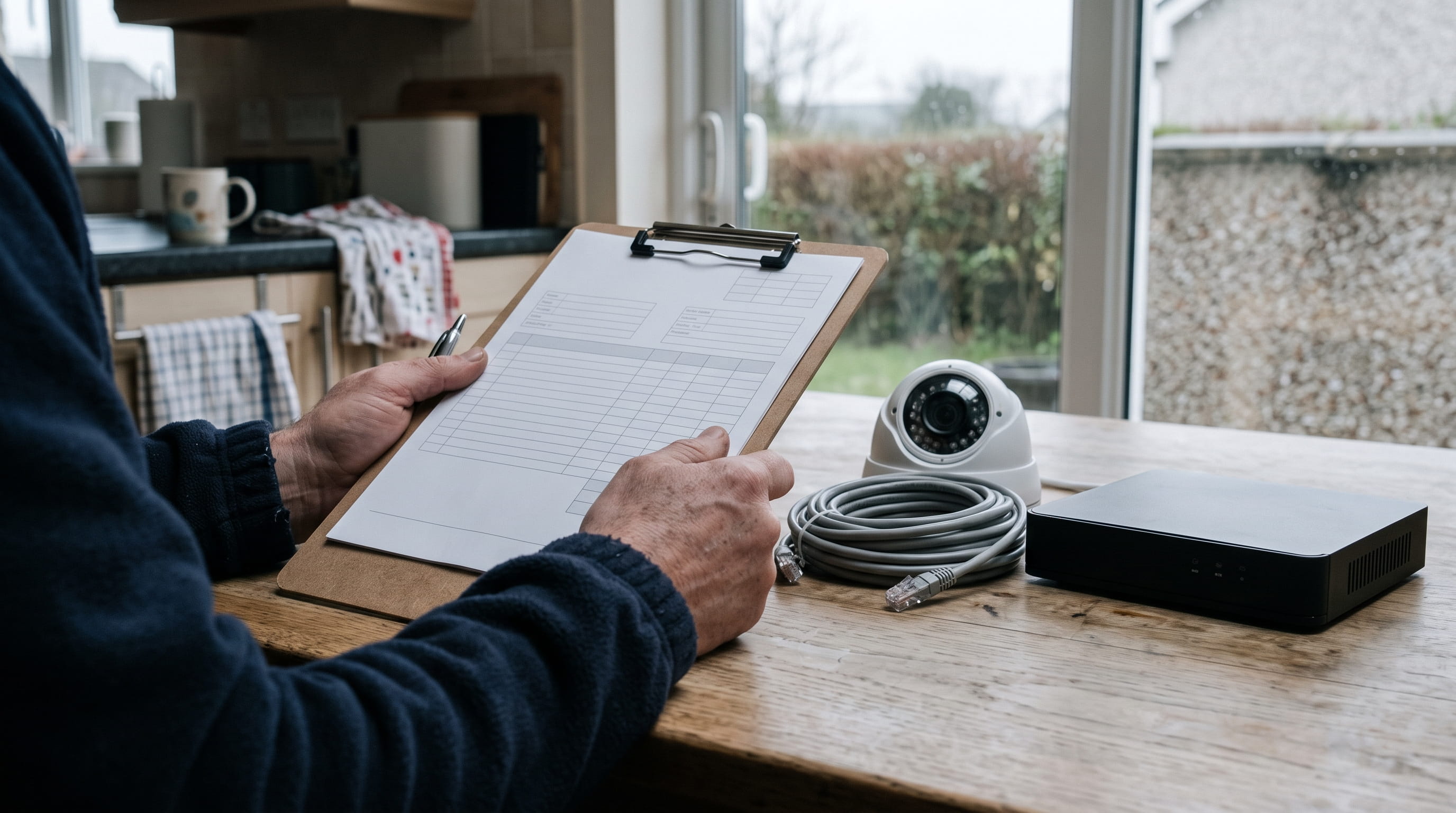
A professionally installed home CCTV system in Ireland costs between €800 and €1,500 for a typical 4 camera setup, with 2 camera systems from around €400 to €900 and 6 to 8 camera systems running €1,200 to €3,000. Those figures cover cameras, recorder, cabling and labour, with VAT included.
Most people start pricing CCTV after a break-in on their road or a van being targeted, and the quotes that come back can vary by hundreds of euro for what looks like the same job. The difference is rarely the camera brand. This guide breaks down the cctv installation cost ireland homeowners should expect by system size, then the handful of factors that move a quote up or down.
How Much Does CCTV Installation Cost by System Size?
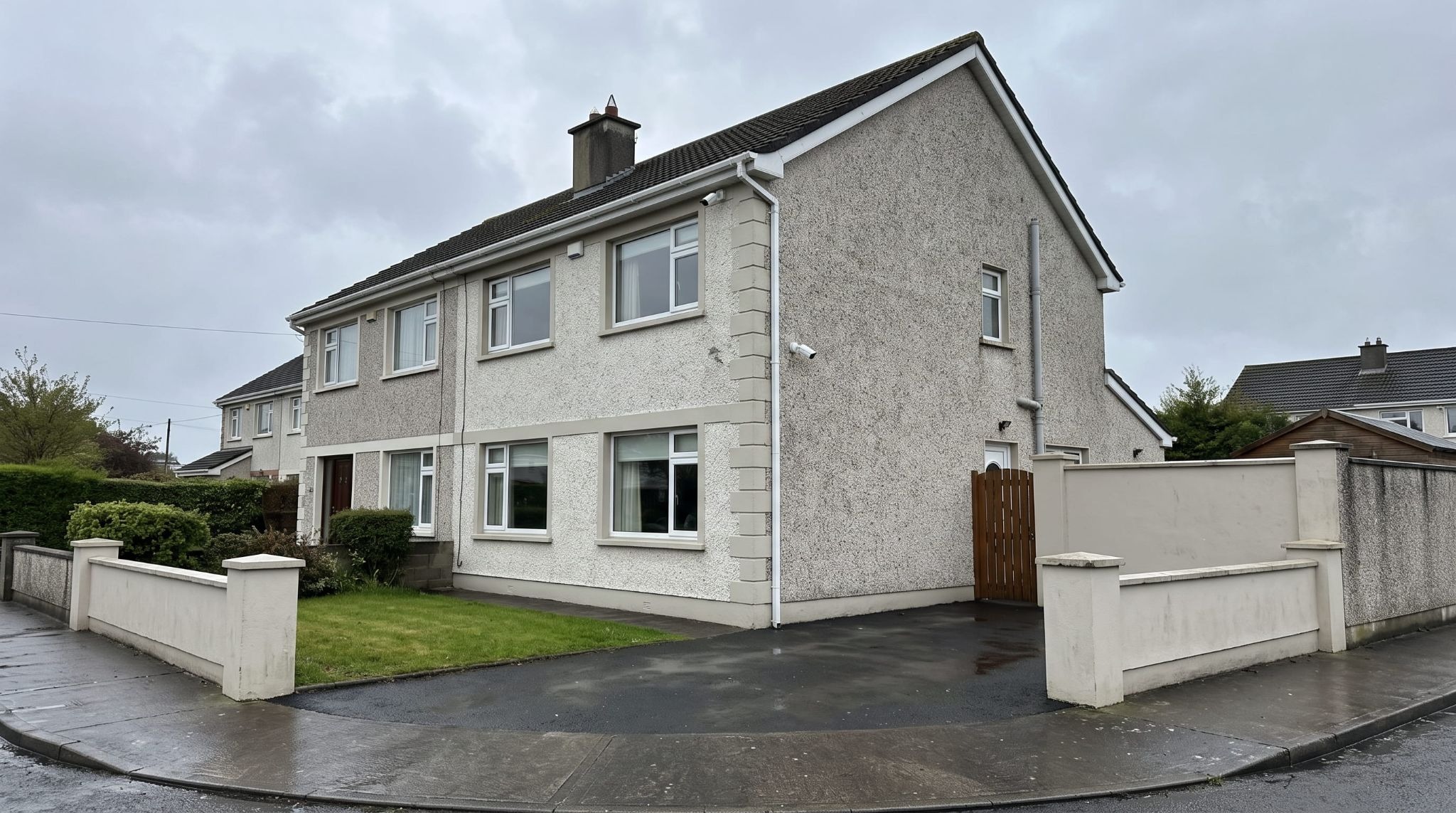
A 4 camera system is the most common residential install and lands between €800 and €1,500 supplied and fitted. Camera count is the biggest price driver because every extra camera adds hardware, a cable run or power point, and labour. These ranges are based on published pricing from Irish installers for standard semi-detached and detached homes.
- Two cameras (€400 to €900). Front door and driveway, or front and rear. Suits apartments, terraces and small gardens.
- Four cameras (€800 to €1,500). Front, rear, side passage and driveway. The standard choice for a semi-detached or detached house.
- Six cameras (€1,200 to €2,200). Larger detached homes, corner sites, or a garage or shed to cover.
- Eight cameras (€1,800 to €3,000). Big gardens, outbuildings, or overlapping coverage with no blind spots.
- Adding one camera to an existing system (€150 to €400). Includes camera, cabling and labour, if the recorder has a spare channel.
A bungalow with easy attic access sits at the bottom of each range. A three storey house with solid block walls and no outdoor power sits at the top.
What Drives the Cost of a CCTV Setup?
Four things decide where your quote lands: wired or wireless, IP or analogue, camera resolution, and how hard the cable runs are on your house. Two systems with identical cameras can differ by €500 purely on cabling and access.
Wired vs Wireless and IP vs Analogue Systems
Wired IP systems cost more to install and less to run, and they're the right choice for a permanent home system. Each camera takes a single network cable back to an NVR (network video recorder) that carries both power and data. The labour of running those cables is where the money goes.
Wireless systems skip most of the cabling but still need power at every camera. A battery camera on a porch is a cheap fit. A mains powered wireless camera on a gable wall still needs an electrician to bring power out, which narrows the saving.
Analogue cameras recording to a DVR only make financial sense when you're reusing old coax cabling. Budget €100 to €300 extra if an existing recorder needs replacing to add channels or support sharper cameras.
Camera Resolution and Installation Labour
Resolution is why one camera costs €60 and another €300. Budget 1080p cameras run €50 to €100 each, mid-range 4MP to 4K cameras with colour night vision and person detection run €100 to €200, and premium 4K units with analytics and two way audio run €200 to €400 or more.
A premium wired 4K system typically adds €400 to €700 over the same camera count at 1080p. For most houses, 4MP reads a number plate without paying for pixels you won't use.
Labour is the most variable line on any security camera installation cost. Cable runs through an open attic to a bungalow eave take an hour. Chasing through solid block, around a dormer and down to a utility room takes a morning.
Can a DIY Kit From Ring, eufy or Hikvision Save Money?
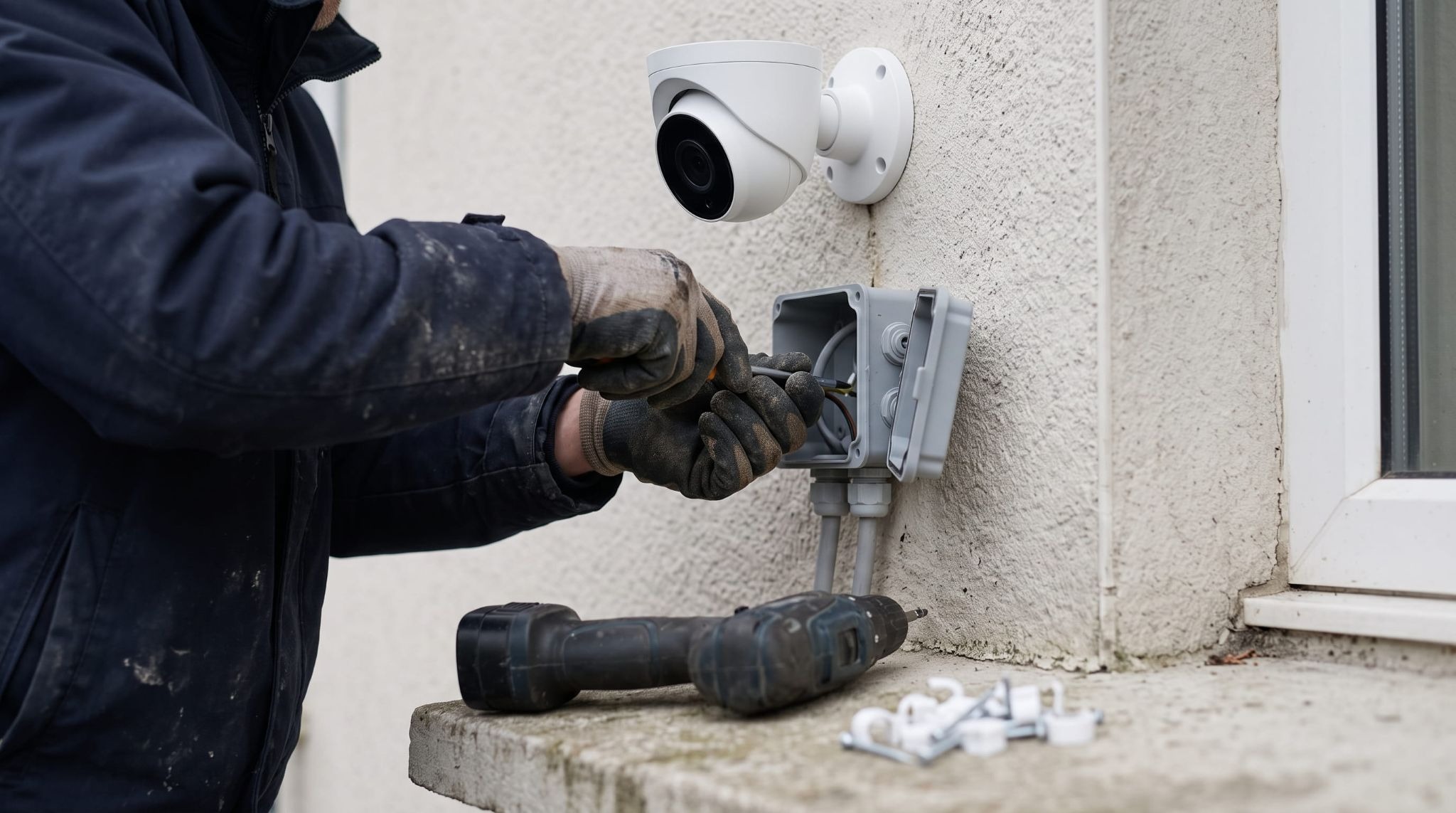
A DIY kit costs less upfront, but only works out cheaper when the cameras are battery powered or outdoor power already exists where you need it. Ring and eufy battery cameras around the doors are a reasonable DIY job, though Ring's cloud storage adds a subscription per camera every month and eufy's weak point is wifi through block walls. Hikvision and HiLook wired kits give the best footage and need no subscription, but they're not plug and play.
The moment a camera needs a new mains supply, a fused spur or a cable through the fabric of the house, it's electrical work for a Safe Electric registered electrician.
If you're planning a home alarm installation in the same year, get cameras quoted alongside it. Shared cable routes and one call-out trim the combined labour.
Does Home CCTV in Ireland Need to Follow GDPR Rules?
Home CCTV is legal in Ireland, and GDPR only applies once a camera records beyond your own boundary. Cameras covering only your garden, driveway and doorstep fall under the household exemption.
Cameras that take in a public footpath, the road or a neighbour's garden make you a data controller, with signage, retention and access duties set out in the Data Protection Commission's guidance on domestic CCTV for anyone whose cameras look outward.
Any contractor installing CCTV as a business must hold a licence from the Private Security Authority, separate from Safe Electric registration for the electrical side. Ask for both.
Getting an Accurate CCTV Installation Quote
The only reliable price comes from a site visit where the installer walks the property, marks camera positions, checks the attic and confirms where power already exists. A figure given over the phone without seeing the walls usually gets revised upward on the day.
If you'd like a fixed price with no hidden charges for a wired or wireless system on your home, get a free quote and we'll survey the property and give you one clear figure for the whole job.