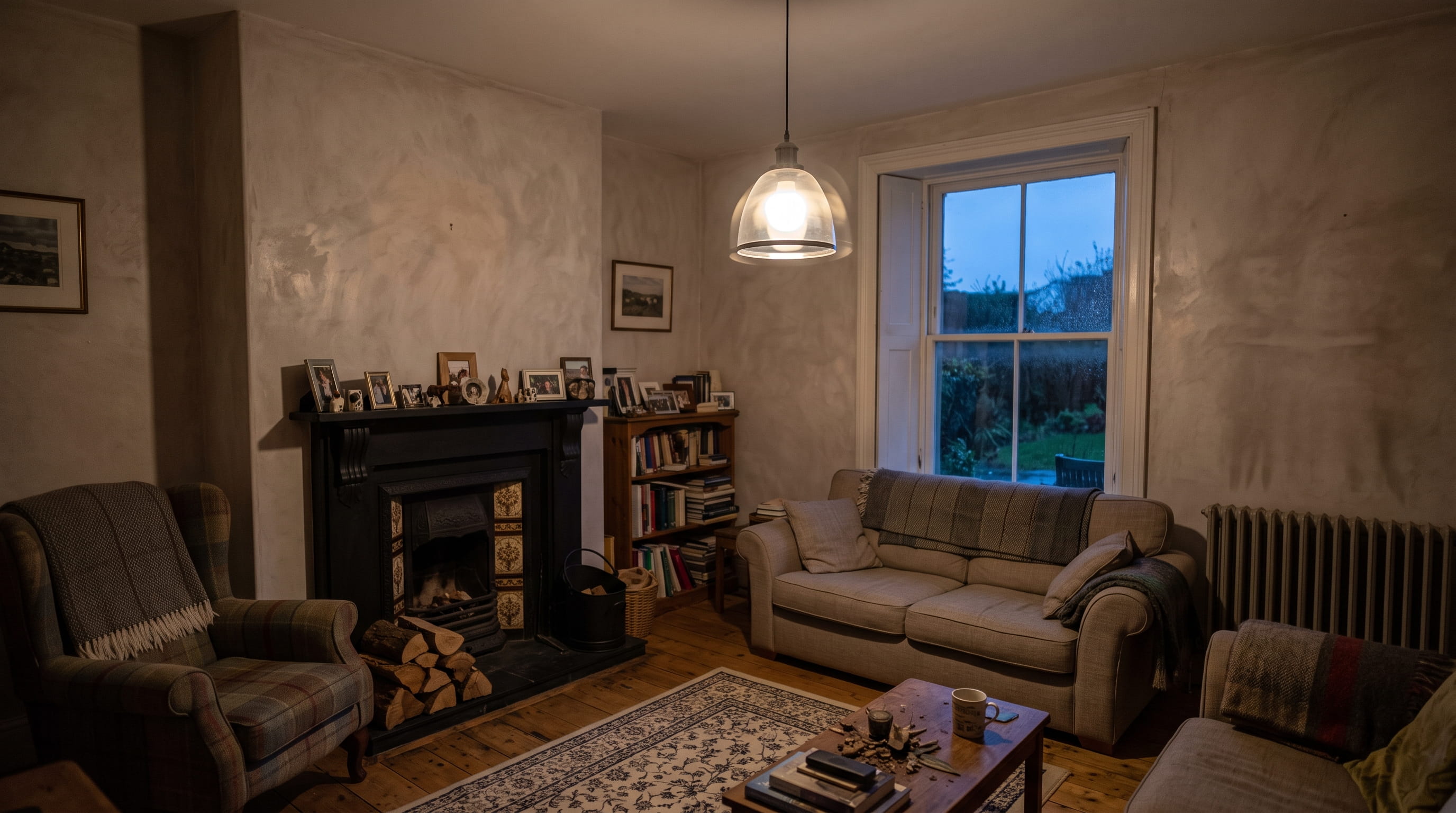
Lights flicker in a house for one of 5 reasons, and the pattern of the flicker usually tells you which one. A single flickering bulb points to a loose bulb, a worn LED driver or a dimmer that doesn't suit the bulb. Several lights flickering together point to a loose connection on that circuit.
Most Irish homes now run LED bulbs on wiring that was installed for halogen or incandescent lamps, so a fair share of the flickering we see is a compatibility problem rather than a dangerous one. The rest comes down to connections, load and the incoming supply from ESB Networks.
This guide walks through the causes by pattern, from one bulb to the whole street, then covers which signs mean you should stop troubleshooting and call a registered electrician.
What Are the Main Causes of Lights Flickering in a House?
Flickering lights come down to 5 causes. A bulb that isn't seated or has a failing driver, a dimmer switch that doesn't match the bulb type, a loose connection somewhere on the circuit, a circuit or supply carrying more load than it should, and a voltage fluctuation on the incoming supply. Match the pattern you're seeing to the cause below.
- One bulb flickers: loose bulb seating, a failing LED driver, or a cheap bulb that's nearing the end of its life.
- One light flickers only when dimmed: dimmer switch compatibility, usually an older leading-edge dimmer driving LED lamps.
- Several lights on one circuit flicker: a loose connection at a switch, ceiling rose, junction box or the circuit's terminal in the consumer unit.
- Lights dip when an appliance starts: circuit overload or a high start-up current from a motor, immersion or shower.
- All house lights flicker or dim randomly: a loose neutral, a loaded main supply, or an ESB Networks supply fault.
- Neighbours' lights flicker too: the fault is on the network, not in your house.
The first two are usually a bulb or switch swap. The last four involve wiring, the fuse board or the supply, and they're the ones that need proper investigation.
Why Is One Light Flickering in Your House?
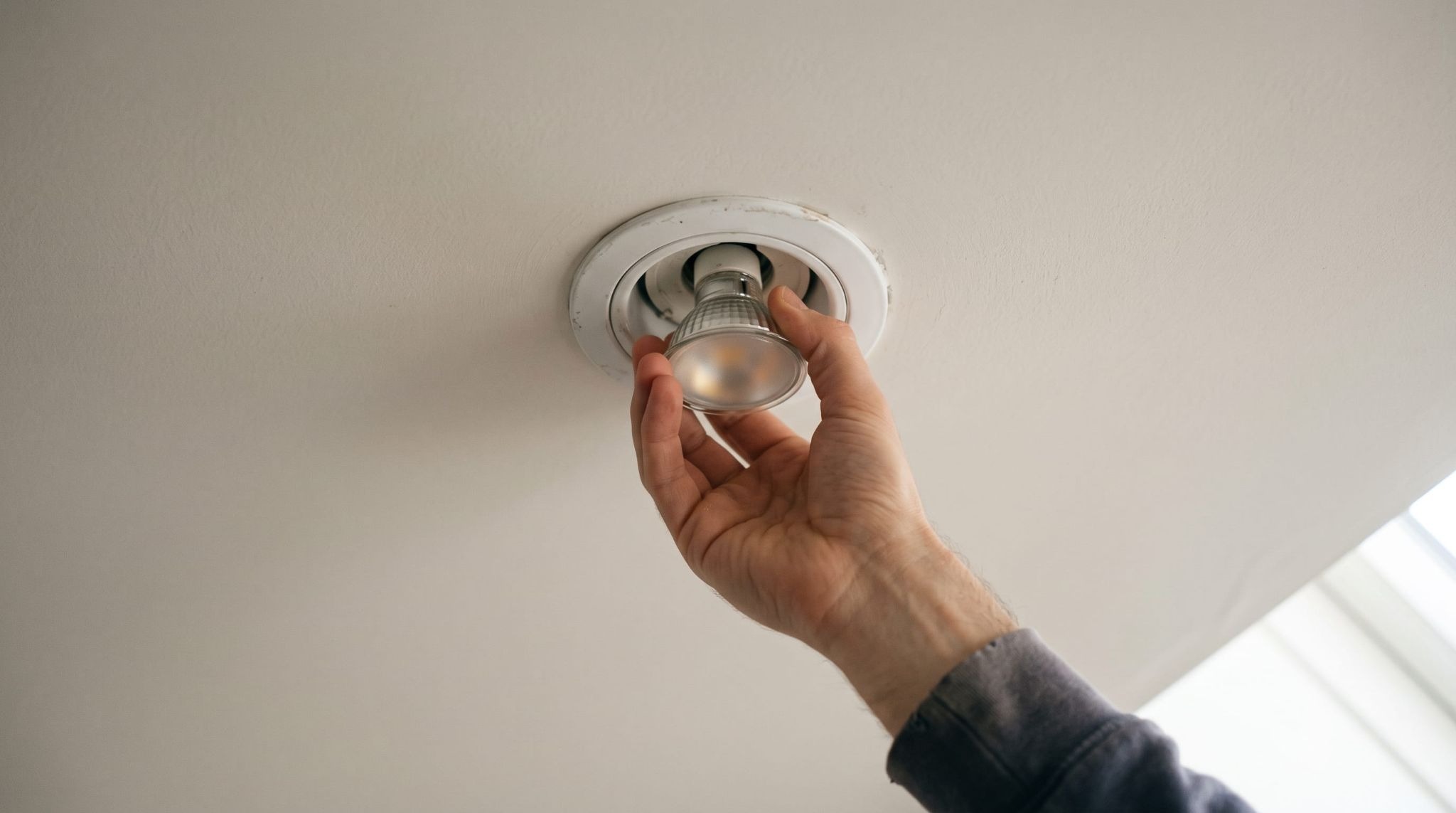
One flickering light almost always means the bulb, the fitting or the switch controlling it. Start by switching the light off, letting the bulb cool, then re-seating it firmly. If that doesn't settle it, swap in a known good bulb of the same type. If the new bulb flickers in the same fitting, the fault has moved to the lampholder or the switch.
Why Do LED Lights Flicker When Nothing Else Does?
LED lights flicker when their built-in driver can't deliver steady current, and that driver is the weak point in most cheap bulbs. Every LED bulb contains a small driver that converts mains AC to the low-voltage DC the diodes need. When it ages, overheats in an enclosed fitting, or was poorly made to begin with, the output stutters and the bulb flickers.
A few things make LED flicker more likely:
- Enclosed or recessed fittings that trap heat and shorten driver life.
- Low-cost bulbs with minimal smoothing in the driver.
- Mixed bulb types on the same switch, which confuses the load the switch sees.
- A bulb rated for a different market than the 230 V supply used across Ireland.
If one LED flickers and the others in the same fitting don't, replace that bulb with a quality branded equivalent and the problem normally goes with it.
Can a Dimmer Switch Cause Lights to Flicker?
Yes, dimmer switch compatibility is one of the most common causes of flickering on a single light in Irish homes. Older dimmers were built for incandescent and halogen loads of 40 W upwards. LED lamps draw a fraction of that, so the dimmer sits below its minimum load and the output becomes unstable.
Why Are Multiple Lights Flickering in One Room or Circuit?
Multiple lights flickering together on one circuit means the fault is on the shared wiring, not in any one bulb. The usual culprit is a loose connection at a point every light on that circuit passes through, such as the switch, a ceiling rose that feeds the next fitting in a loop, a junction box in the attic, or the circuit's terminal on the consumer unit.
Two things narrow it down:
- Flicker that changes when you touch or flick the switch points to the switch or its back box.
- Flicker that worsens when another light on the same circuit is turned on points to a loose neutral or a shared connection further back.
Either way, this is a job for a registered electrician, because finding the loose point means opening fittings and testing the circuit live.
Why Are All the Lights Flickering or Dimming in the Whole House?
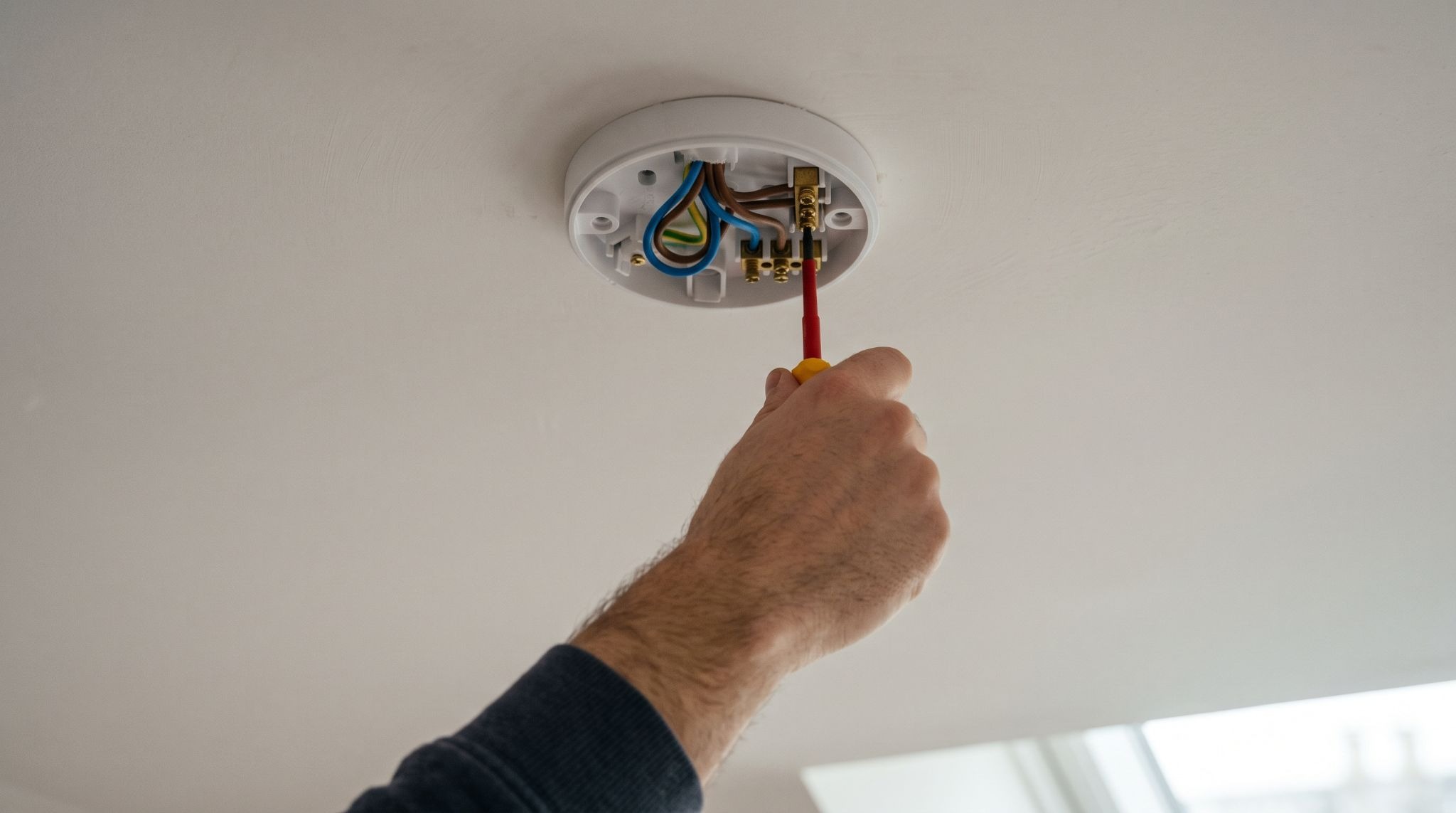
All house lights flickering at once means the problem sits on the main supply side, before power is split into individual circuits. That's either a loose neutral at the main connection, a supply that can't carry the load the house now draws, or a voltage fluctuation on the ESB Networks side.
What Is a Loose Neutral and Why Is It Dangerous?
A loose neutral is a poor connection on the main neutral conductor, and it's the single most serious cause of whole-house flickering. The neutral carries current back from every circuit, so when its connection is weak the voltage across the house becomes unstable. Lights brighten and dim randomly, and sensitive appliances can be damaged by the swings.
Is the Flickering Coming From the ESB Networks Supply?
Flickering can come from the supply itself, and ESB Networks treats it as a reportable fault. ESB Networks delivers electricity in a voltage range of 207 Volts to 253 Volts, and if your supply drifts outside that band the lights react before anything else does.
If you notice flickering lights, appliances not working properly, or low power supply, it may be due to low voltage or a fault in the electricity supply, and ESB Networks asks you to report it on their 24-hour line.
Two quick checks tell you whether it's likely a network issue:
- Ask a neighbour. If their lights flicker at the same times, the fault is almost certainly on the network.
- Watch for timing. Supply faults tend to follow the same pattern across the whole house and often line up with evening peak demand or storms.
You can book a voltage assessment through your ESB Networks online account, which may result in a recorder being fitted at your meter to log what the supply is actually doing.
Why Do Lights Flicker When an Appliance Switches On?
Lights flicker when an appliance starts because that appliance pulls a short burst of current far higher than its running load, and the brief voltage dip shows up on the lighting. Electric showers, immersion heaters, tumble dryers, heat pumps and anything with a motor or compressor all do this. A momentary dip as the kettle boils is normal. Sustained dimming while the appliance runs is a sign of a problem.
- Momentary dip, then steady: normal inrush current, no action needed unless it's getting worse.
- Lights stay dim while the appliance runs: the circuit or the main supply is carrying more than it was designed for.
- Dip plus a trip switch going: circuit overload, which needs the loads rebalanced or the circuit upgraded.
If the dimming started after a new appliance went in, that's usually the cause, and a fuse board upgrade or a supply increase is the fix rather than more bulbs.
When Do Flickering Lights Mean Danger?
Flickering lights mean danger when they come with heat, smell, noise or damage. A loose bulb or a mismatched dimmer is an annoyance.
If you see any of these, switch off the affected circuit at the consumer unit and call a registered electrician the same day.
- Burning or fishy plastic smell near a switch, socket or the fuse board.
- Scorch marks or discolouration on a switch plate, ceiling rose or consumer unit cover.
- Buzzing, crackling or sizzling from a switch or fitting when the light is on.
- Switch plates or sockets that feel warm to the touch.
- Bulbs blowing repeatedly in different fittings, which points to voltage swings from a loose neutral.
- Trip switches going along with the flicker, which means a fault current is present.
- Flicker that's getting steadily worse over days rather than staying the same.
Whole-house flickering combined with any of these should be treated as an emergency call-out rather than something to book for next week. Our team runs a 24/7 emergency service for exactly this kind of fault.
What Can You Check Yourself Before Calling an Electrician?
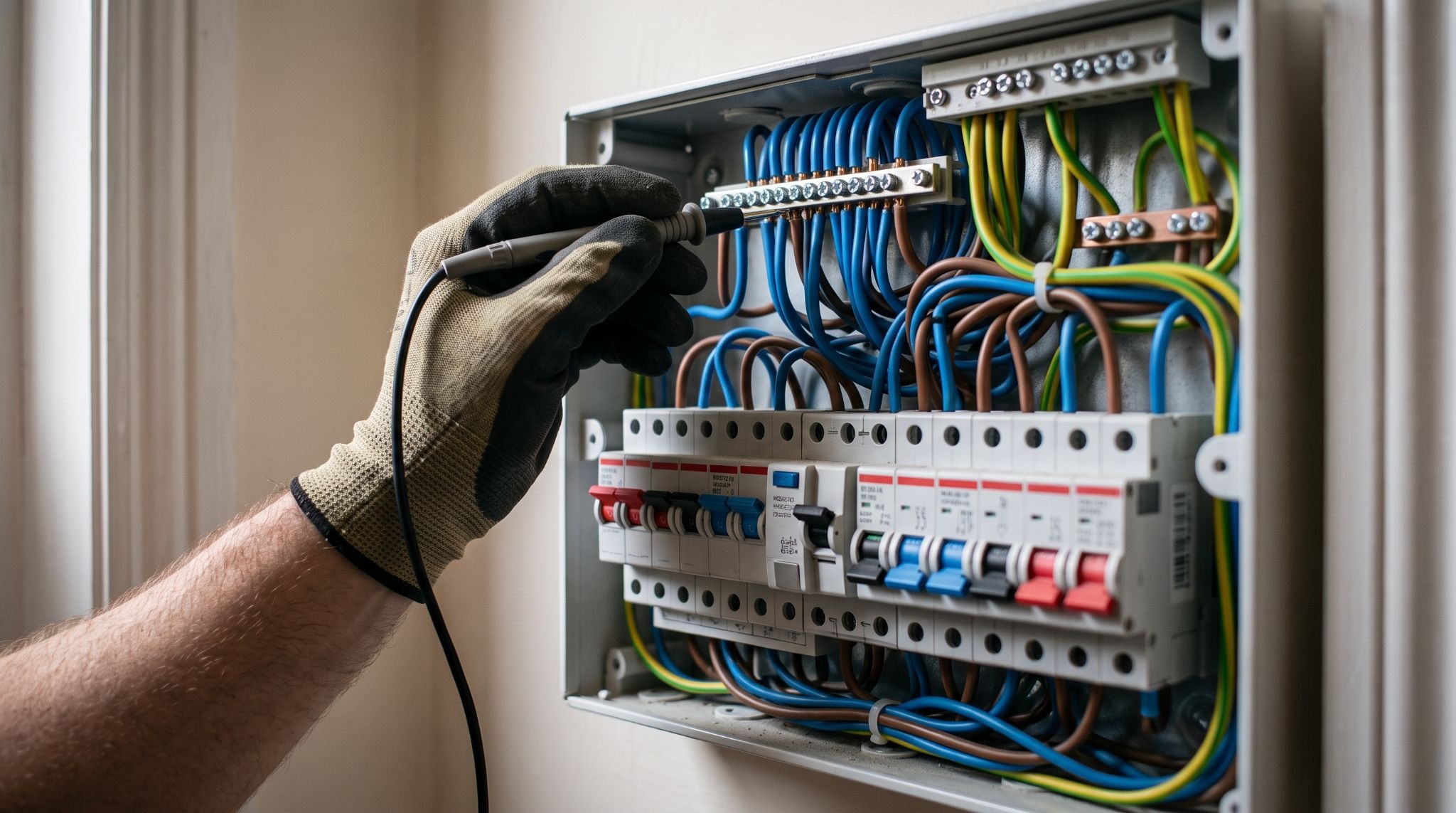
You can safely check bulbs, switches and the flicker pattern yourself, but nothing beyond that. Anything that involves opening a fitting, a switch back box or the consumer unit is restricted electrical work in a domestic setting, and under Irish regulations electrical contractors must be registered with the Safe Electric Scheme to carry it out. The steps below cover what's safe to do first.
- Note the pattern. One bulb, one room, the whole house, or only when an appliance runs. This alone rules out most causes.
- Re-seat or swap the bulb. Switch off, let it cool, tighten it, then try a known good bulb of the same type.
- Check the dimmer. If the flicker only happens when dimmed, the switch and bulbs don't match.
- Ask a neighbour. Shared flickering means a network fault, so report it to ESB Networks.
- Note the timing. Write down when it happens and what's running at the time. An electrician will want this.
- Stop if you notice heat, smell or noise. Switch off the circuit and make the call.
Where the flicker is one symptom among several, a periodic inspection gives you a documented picture of the whole installation rather than a patch on one circuit.
If the lights in your house are flickering and you're not sure which category you're in, get a quote now and we'll trace the fault and give you a clear answer before any work starts.