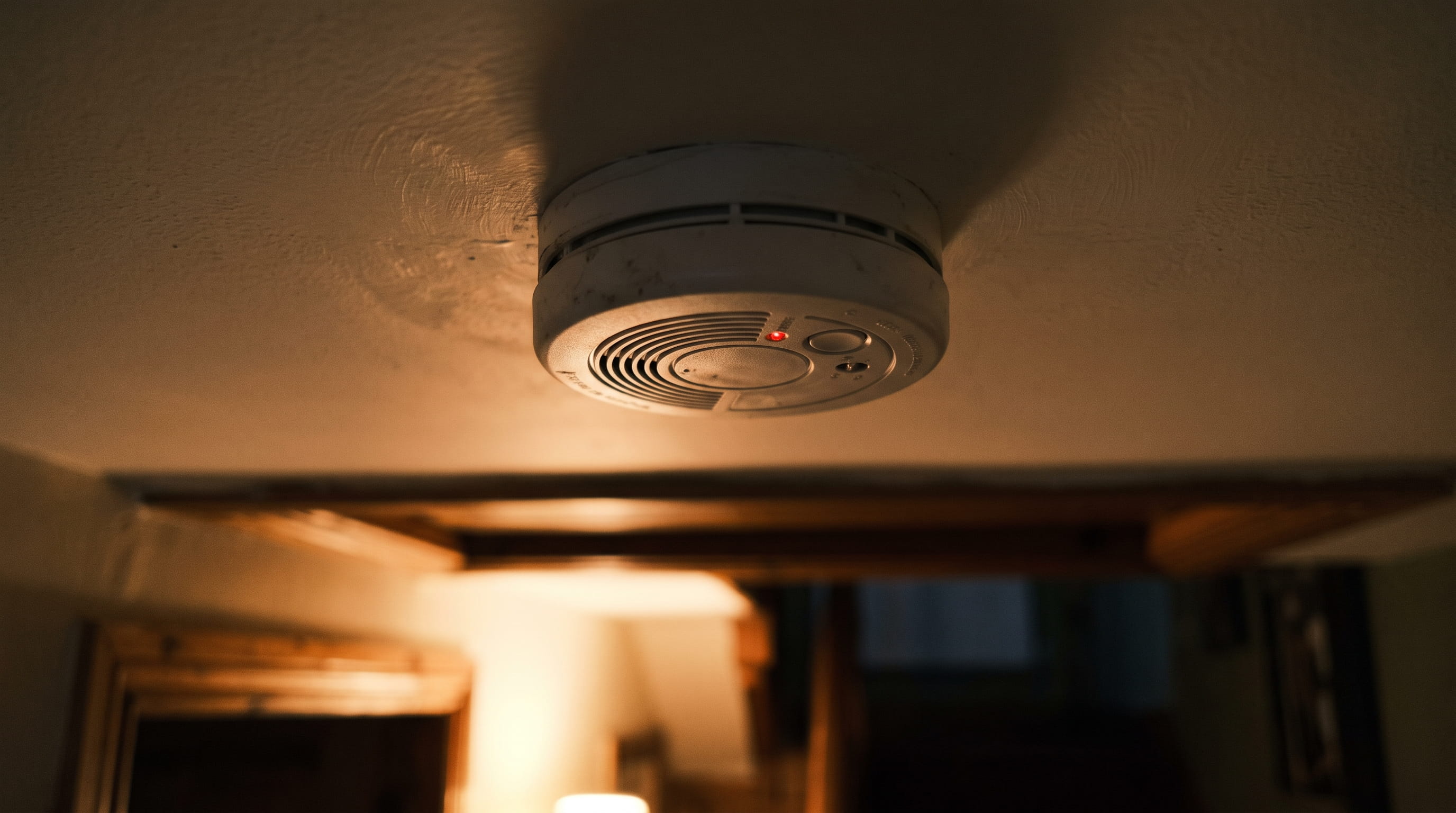
A smoke alarm beeping once every 30 to 60 seconds means one of three things. The battery is low, the unit has reached the end of its working life, or there is a fault in the sensor or power supply. A continuous loud alarm is different. That means it has detected smoke or steam and is doing its job.
The chirp usually starts at night, when the house is coldest and a weak battery dips below its threshold. Most people pull the battery, which solves the noise and leaves the house unprotected. Here is how to read the beep, find the right unit, and fix it properly.
What Different Smoke Alarm Beeps Mean
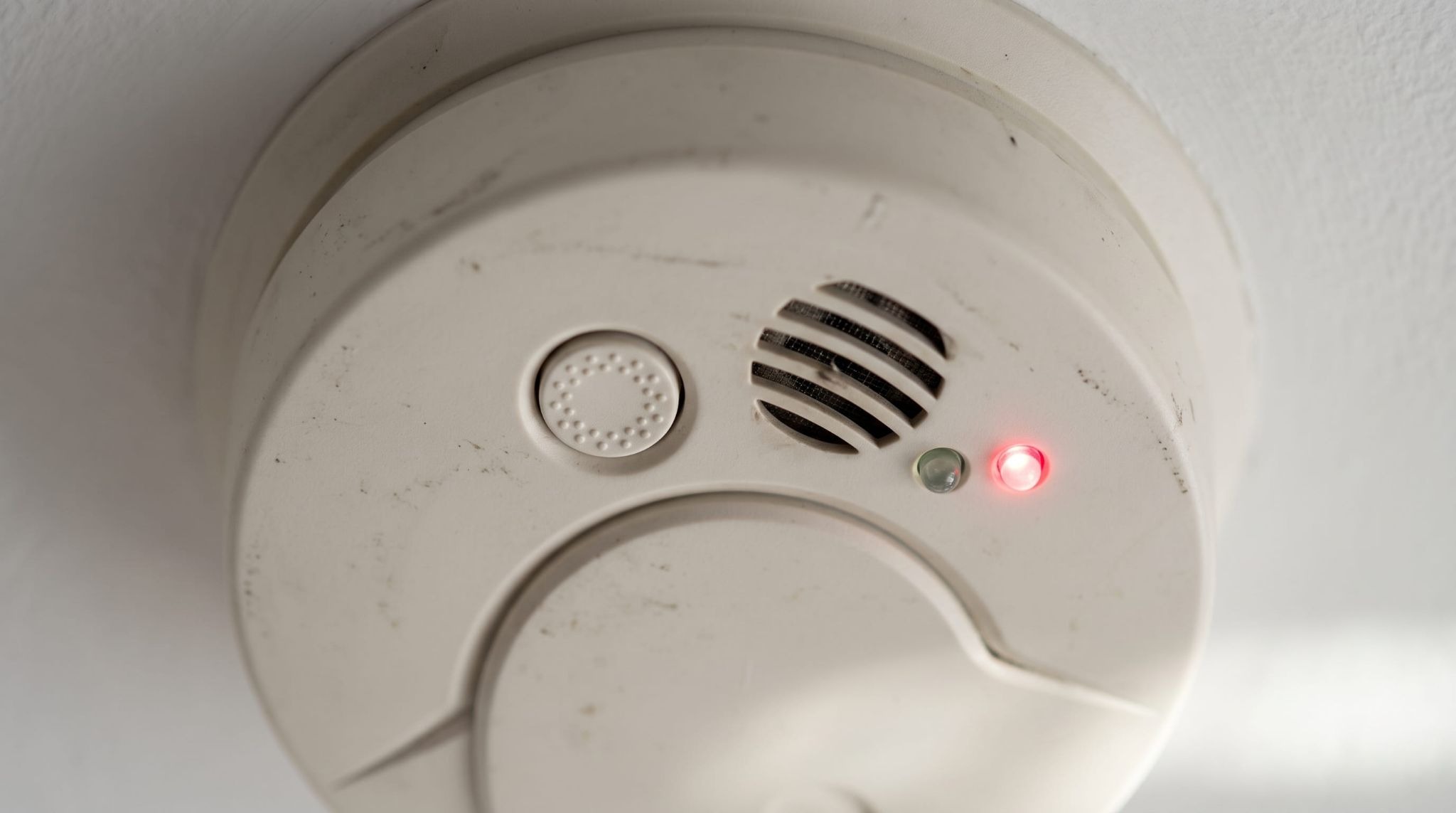
A single chirp at a regular interval is a status warning. A rapid repeating pattern of three or four beeps is a smoke or carbon monoxide alarm. A random, irregular beep usually points to a power or sensor fault rather than a battery.
- One chirp every 30 to 60 seconds: low battery. Ei Electronics mains units, the common brand in Irish homes, beep and flash red every 40 seconds when the backup battery is depleted.
- Chirp continues after a new battery: end-of-life warning. Sealed 10-year units chirp this way when the lithium cell or sensor has aged out.
- Three loud beeps, pause, repeat: smoke detected. Check every room before assuming it's false.
- Four loud beeps, pause, repeat: carbon monoxide detected on a CO or combined alarm. Open windows and get everyone outside.
- Irregular beeps with no pattern: a mains interruption, loose connection or dusty sensor.
A steady green light on a mains unit means power is present. A red flash with each chirp confirms the warning is coming from that unit.
How to Stop a Smoke Alarm Beeping
Replace the battery, reset the unit, and check the date on the back. That sequence clears the majority of chirps. If the alarm still beeps after all three steps, the unit is telling you something a battery won't fix.
- Take the battery out and hold the test button for 15 to 20 seconds to drain residual charge.
- Fit a new 9V alkaline battery, the right way round, and close the drawer fully. A rechargeable or carbon zinc battery, or a battery that has sat in a drawer for two years, can read as low straight away.
- Check the manufacture date on the back. Fire Ireland advises replacing any alarm after ten years, whatever the test button says. If it is past that, stop changing batteries and replace the unit.
If a battery-only alarm chirps with the battery out, that is residual charge and it clears within a minute or two. A mains alarm chirping with no battery is normal. The missing backup is itself the warning, so pulling the battery makes the noise worse, not better.
Why a Wired or Mains Smoke Alarm Keeps Beeping
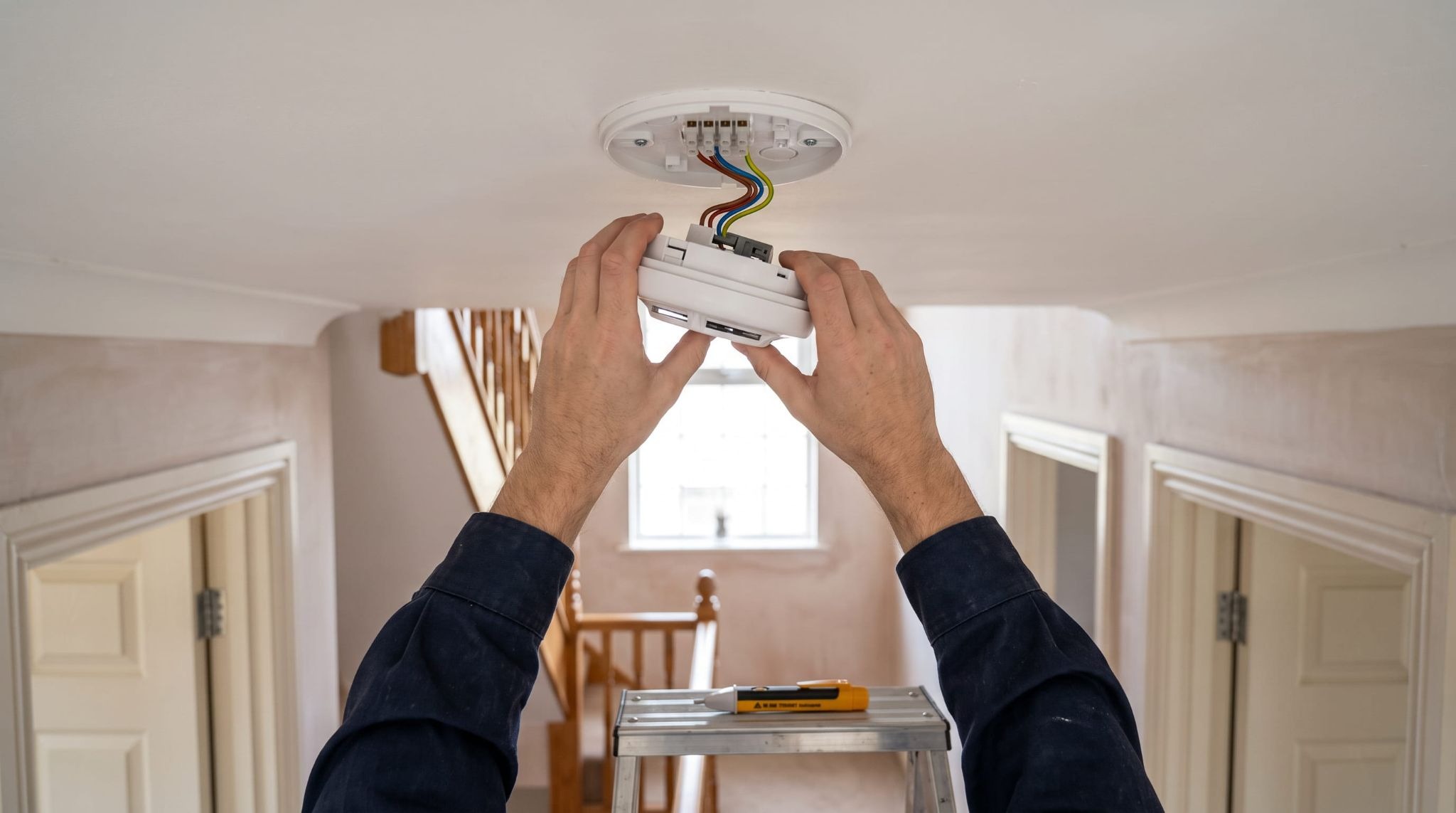
A wired smoke alarm beeping almost always means a weak backup battery in one specific unit, or a mains interruption to the circuit. Interconnected alarms share a signal wire, so one unit's chirp can seem to come from anywhere in the house, but each unit still manages its own battery.
- Find the right unit first. Only the alarm that triggered the warning flashes its red light. Stand under each alarm in turn, wait for the next chirp, and watch for the flash. Replace that unit's battery.
- Check the green light. If the green light is off on that unit but on elsewhere, the problem is the mains feed to that alarm, not the battery. After a power cut, a tripped breaker or fuse board work, the units run on battery and chirp if it is weak. Restore the supply and press and hold the test button on one alarm. All interconnected units should sound together.
- Don't confuse hush with reset. The hush button silences a nuisance alarm and reduces sensitivity for around 10 minutes on Ei units, then resets. It does nothing for a low battery chirp.
If the green light stays off with the rest of the house powered, or a breaker won't hold, the wiring needs an electrician rather than another battery.
When a Beeping Smoke Alarm Needs Replacing
Replace the alarm when it is more than 10 years old, when it chirps after a fresh battery and a full reset, or when it fails the weekly test. Sensors degrade with age, and an old unit can still chirp and test while being slower to react to real smoke.
If the house still runs on standalone battery alarms, a mains interconnected system to I.S. 3218, the Irish standard published by the National Standards Authority of Ireland, removes the dead battery problem behind most chirping. A smoke and CO detector installation brings the whole house up to that standard in one visit.
Ready to Stop the Chirping for Good?
Most smoke alarm beeping is a battery or an old unit, and ten minutes with a stepladder sorts it. If the chirp survives a new battery, the green light is out on a mains alarm, or the system is past its ten-year mark, bring in a registered electrician rather than keep guessing.
Our team replaces and installs mains interconnected smoke and heat alarms across Dublin and the surrounding counties, with same-day response and a certificate of compliance on every job. Get a free quote or call (01) 697 1995.