The safest outdoor Christmas display uses lights rated for outdoor use (IP44 or higher), powered through RCD protection, with plugs and transformers kept dry. Check every set for damage before it goes up, keep well clear of overhead wires, and switch everything off at night. Those six habits prevent most of the shocks and fires we see each winter.
These Christmas lights safety tips are written for Irish conditions. Our winters bring weeks of rain, wind and damp, and a light set that copes fine in a dry climate can fail fast on a wet Dublin gutter.
Below, we cover what to buy, how to check old sets, how to power a display properly, and when it’s time to stop and call a registered electrician.
What Makes Outdoor Christmas Lights Safe in Irish Weather?
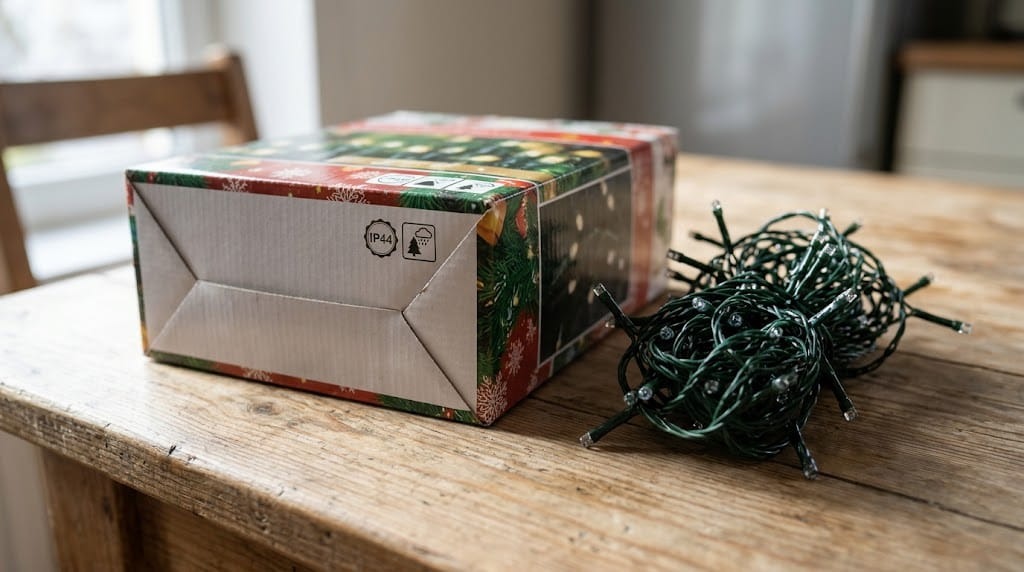
Outdoor Christmas lights are safe in Irish weather when they carry an IP rating of at least IP44, are clearly marked for outdoor use, and run at extra-low voltage where possible. The IP rating tells you how well the set keeps out moisture, and in a country where December means rain most days, that number matters more than anything on the box.
Packaging that says “indoor and outdoor” is not enough on its own. Look for the IP code itself.
- IP20. Indoor only. No protection against water, so never hang these outside.
- IP44. Splash-proof. The minimum for outdoor Christmas lights, best in sheltered spots like porches and under eaves.
- IP65. Dust-tight and protected against water jets. A better choice for exposed gutters, trees and railings that take the full weather.
Extra-low voltage sets, usually LEDs powered through a transformer, also reduce shock risk because the lights themselves run at a fraction of mains voltage. LEDs run cooler than old filament bulbs too, which lowers the fire risk around dry foliage and wooden fascia.
Christmas Lights Safety Tips for Checking Last Year’s Sets
Check every set before it goes up, because lights that spent eleven months in a damp attic or shed are the most likely to fail. Plug each set in indoors on a dry surface first and look over the full length while it’s lit.
Bin the set and buy new if you spot any of these:
- Cracked, split or brittle cable insulation
- Exposed copper or tape holding a cable together
- Broken lamp holders or missing bulbs
- Discoloured or scorched plugs and transformers
- A transformer case that is cracked or no longer seals
Repairs to cheap light sets are rarely worth it. A taped joint on a wet gutter is exactly where water gets in. Also be wary of very old sets with plugs that lack insulated pins, as they were built to older standards.
Why Outdoor Christmas Lights Need RCD Protection
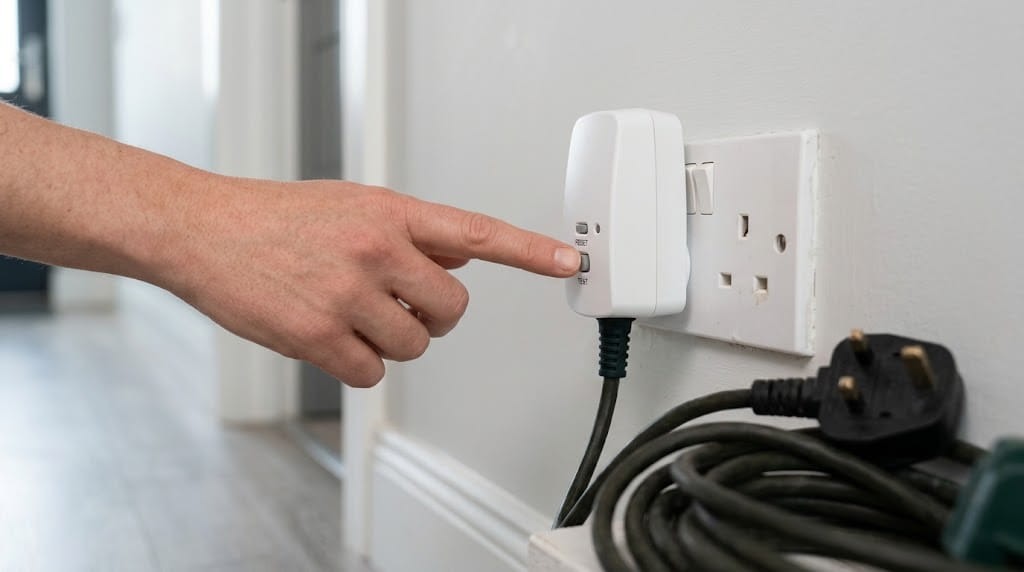
Outdoor Christmas lights need RCD protection because an RCD cuts the power within a fraction of a second if current leaks to earth, which is what happens when water gets into a faulty connection. Without one, that leak can pass through a person instead. A 30mA RCD is the standard level of protection for outdoor equipment.
Most modern Irish fuse boards already have RCD protection on socket circuits. Older boards often don’t. If you’re unsure what yours has, our guide to what an RCD, MCB and RCBO each do explains how to tell the difference at a glance.
Two simple steps cover you either way:
- Test the RCD before plugging in. Press the test button, confirm it trips, then reset it.
- Use a plug-in RCD adapter if your board has no RCD on that circuit. It sits between the socket and the lights and gives the same protection.
How to Power Outdoor Christmas Lights Safely Without an Outdoor Socket
The safest way to power outdoor Christmas lights without an outdoor socket is a single outdoor-rated extension lead, plugged into an RCD-protected socket indoors, with every connection kept off the ground and out of the rain. Most problems come from the connections between the lights and the wall, not the lights themselves.
Follow these rules for the cable run:
- Use one outdoor-rated lead. Never chain one extension lead into another.
- Unwind cable reels fully. A coiled reel under load can overheat.
- Raise and cover every joint. Keep connectors off wet paving and grass, ideally in a weatherproof connector box.
- Never trap cables in doors or windows. Constant pressure crushes the insulation over a few weeks.
- Follow the transformer instructions. Many sets require the plug or transformer to stay indoors, even when the lights are rated for outside.
Don’t overload the socket with multi-way adaptors either. A display that needs several adaptors is a display that needs a dedicated supply. For the wider picture on garden electrics, see our guide on outdoor lighting and garden power for permanent installations.
When to Switch Off Outdoor Christmas Lights
Switch outdoor Christmas lights off every night before bed and whenever the house is empty. Unattended lights are a fire risk, and an overnight storm is when water ingress and wind damage are most likely to cause a fault nobody notices.
A plug-in timer rated for the job takes the effort out of it. Set it to switch the display off at a fixed time each evening.
Switch off and unplug during severe weather warnings too. High winds can pull a string loose and drag a connector into standing water, and a quick unplug costs you nothing.
Warning Signs Your Outdoor Christmas Lights Setup Is Unsafe
Your outdoor Christmas lights setup is unsafe if the RCD or trip switch keeps tripping, plugs or transformers feel hot, or you notice a burning smell or scorch marks. Any of these means switch off at the wall and leave it off until the cause is found.
Other signs to watch for:
- Lights flickering or failing after rain
- Buzzing from the transformer or socket
- Condensation inside connectors or lamp holders
- A socket faceplate that is warm to the touch
A repeat trip is the RCD doing its job, so don’t keep resetting it. Find the wet or faulty section by testing each set on its own, or call an electrician if the fault isn’t obvious.
Is a Permanent Outdoor Socket Worth It for Christmas Lights?
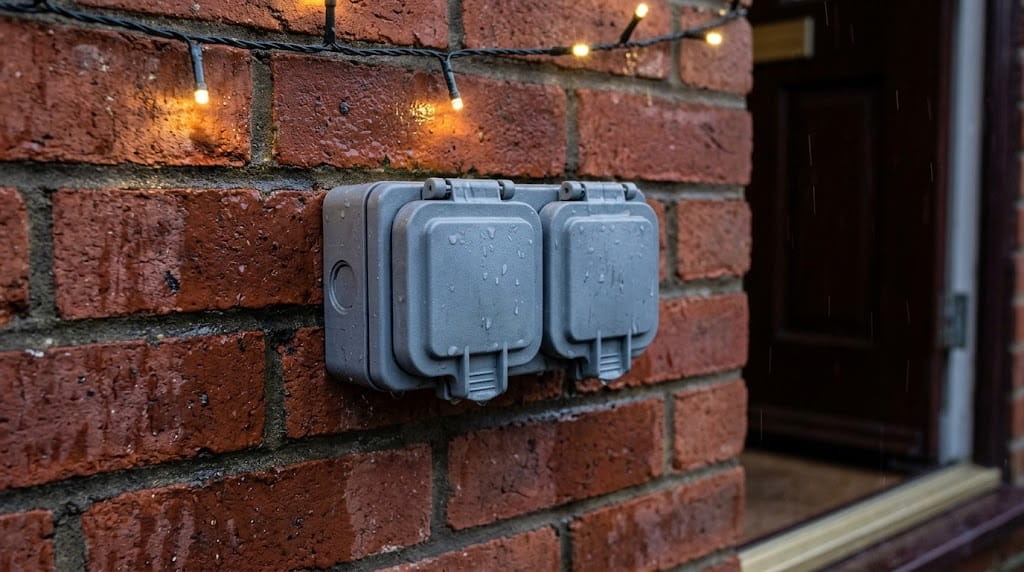
A permanent outdoor socket is worth it if you decorate every year, because it removes the riskiest part of the setup, the cable running through a door or window. A weatherproof, RCD-protected outdoor socket installed by a registered electrician gives you a safe supply right where the display starts.
It also pays off beyond December. The same socket runs a pressure washer, garden tools or permanent garden lighting through the rest of the year.
Outdoor sockets count as electrical work, so the installer must be registered with Safe Electric, the regulator for electrical contractors in Ireland. Our team is Safe Electric registered and issues a certificate of compliance with every job.
If you’d like one fitted before the lights go up, our outdoor and indoor socket installation service covers homes across Dublin and the surrounding counties.
Getting Your Christmas Display Ready the Safe Way
A safe outdoor display comes down to the right lights, RCD protection, dry connections and switching off at night. Get those right and your display can run all season without a single trip.
If your RCD keeps tripping, your fuse board has no RCD protection, or you want a permanent outdoor socket before December, get a free quote from a registered electrician and have it sorted before the lights go up.