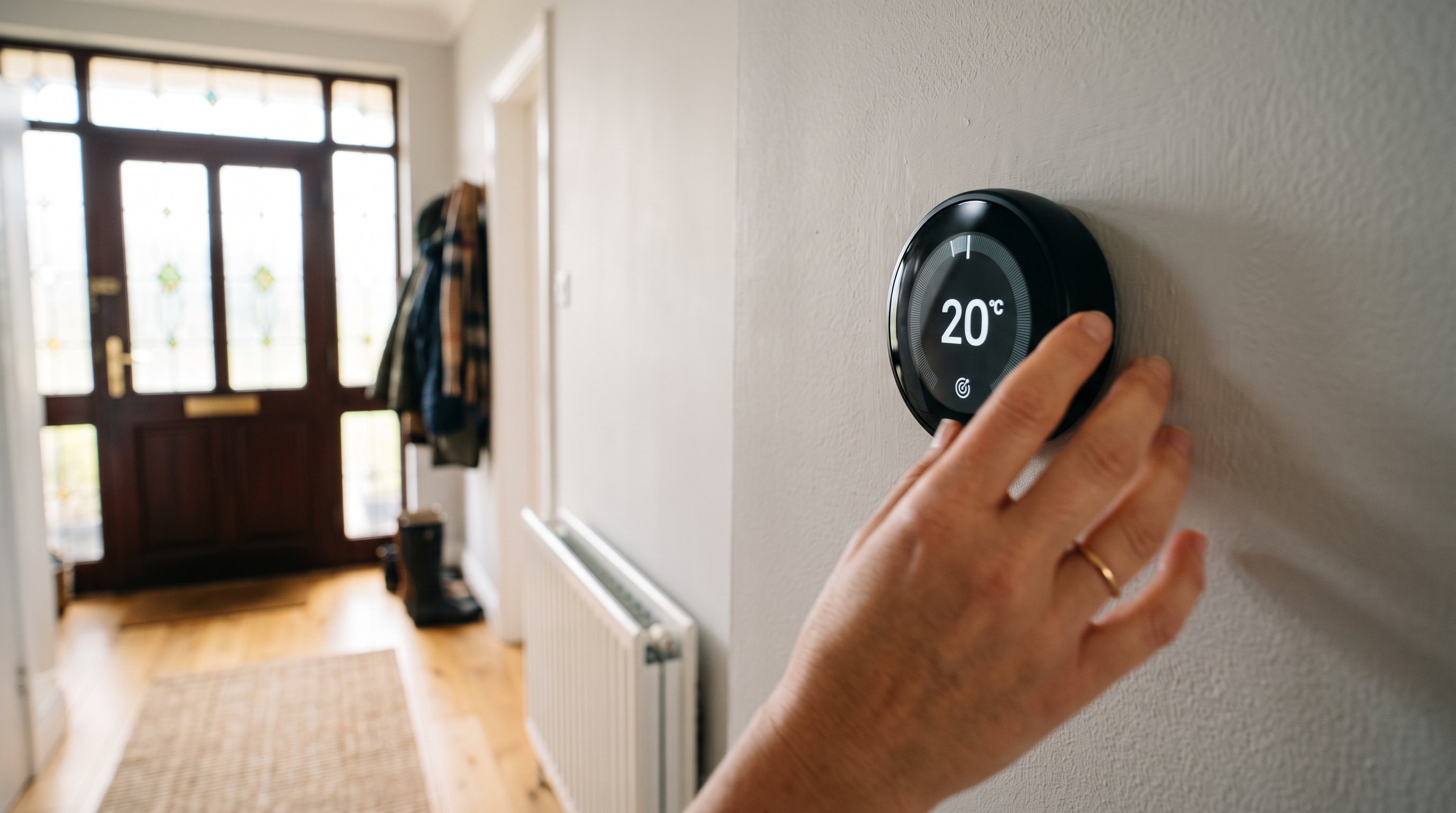
A smart thermostat in Ireland is worth the money if your heating currently runs on a basic time clock with little or no room temperature control. If you already have a working 7-day programmer, a room thermostat and thermostatic radiator valves, the case is much weaker.
SEAI puts the figure for a heating controls upgrade at up to 20% off energy use. That number covers the whole upgrade, meaning zoning, timing, boiler interlock and radiator valves working together. Swapping one dial on the wall for a connected one delivers a fraction of it.
The rest depends on your system and your wiring. Combi or cylinder, one zone or two, and what sits behind the existing stat all change the job, the price and the payback. Here is how to judge it for your own house.
How Much Can a Smart Thermostat Save on Heating Bills in Ireland?
Heating controls typically cut a home's energy use by up to 20%, according to SEAI's homeowner's guide to heating controls, and that ceiling assumes a house that had little or no control to begin with.
A smart thermostat fitted on its own lands well below that. Most of the saving comes from splitting the system into zones, matching run times to when people are actually home, and stopping the boiler firing when nothing is calling for heat.
To work out whether the sums stack up in your house:
- Add up what you spend on heat in a year, whether that is oil fills, gas bills or the heating share of your electricity.
- Take a fifth of that as the absolute best case, and less if you already have a programmer and TRVs in place.
- Divide the installed cost by that figure. The answer is your payback in years.
Comfort matters too. Remote control, holiday overrides and a schedule that actually matches your week are worth something even when the euro saving is modest.
What a Smart Thermostat Costs to Buy and Install in Ireland
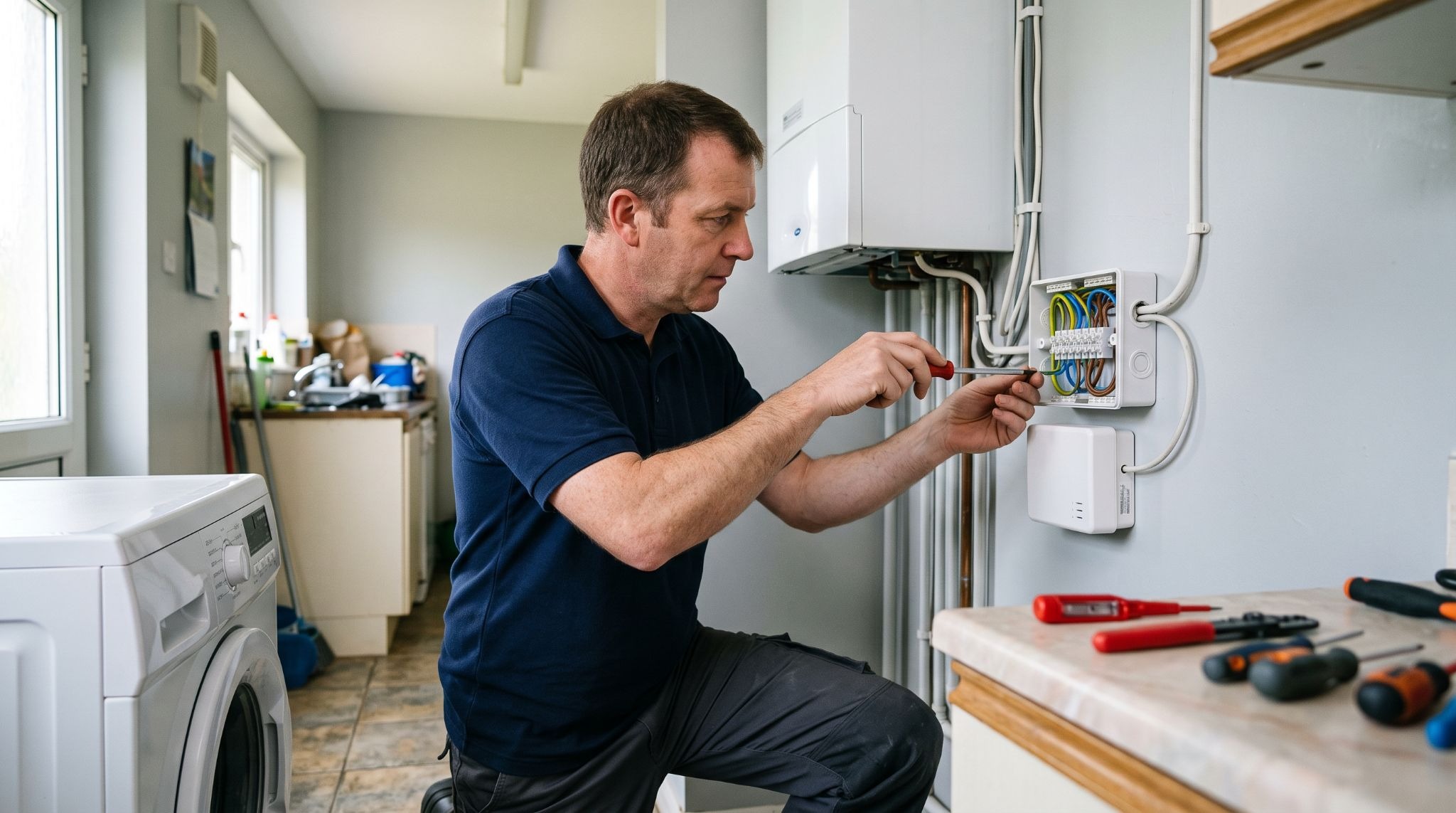
Expect roughly €150 to €300 for the thermostat itself, based on current Irish retail pricing, with budget models below that and multi-zone kits above it. Installation is quoted separately and depends entirely on what is already wired at the boiler.
- The thermostat. €150 to €300 for most mainstream models sold here. Starter kits and entry-level units sit lower.
- A receiver or extension kit. Needed where there is no existing wired stat, or where you want the unit somewhere the cabling does not currently reach.
- Extra zone hardware. Motorised valves, a wiring centre and a second thermostat if you are splitting upstairs and downstairs.
- Electrician's time. A straight swap onto sound existing wiring is a short visit. New cable runs, a fused spur or zone valves turn it into a bigger job.
- Hot water control. A cylinder thermostat and immersion timer where the house has a cylinder rather than a combi.
Get the quote itemised. A price that looks high often includes zoning work the house needed anyway, and a price that looks cheap sometimes leaves the hot water on its old uncontrolled circuit.
Will a Smart Thermostat Work With Your Existing Heating System?
Most smart thermostats work with standard Irish gas and oil boiler systems, wired either at the boiler or through a receiver at the existing wiring centre. Hot water, multiple zones and older wiring are where the complications appear.
Combi Boilers vs Cylinder Systems in Irish Homes
Combi boilers are the straightforward case. There is no cylinder or immersion to schedule, so one thermostat handles space heating and hot water looks after itself on demand.
Cylinder systems need a second channel for hot water, plus a cylinder thermostat. SEAI recommends setting hot water to around 60°C, and a model without a hot water channel leaves that half of your energy use uncontrolled.
Homes With Two or More Heating Zones
Each heating zone needs its own thermostat or its own receiver channel, so a two-zone house effectively buys the kit twice. SEAI treats two independently controlled zones as the minimum standard, covering space heating and domestic hot water.
Larger houses often add a third zone to separate living areas from bedrooms. Check before you buy that the model you like supports the number of zones you actually have.
Older Wiring and Boiler Connections Behind the Thermostat
Older installations are where the surprises live. Many older room thermostats are wired with a switched live only, so a mains-powered smart model needs either a new cable run or a receiver sited at the boiler instead.
Two other things get flagged on site regularly. Boiler connections that were never set up for interlock keep the pump running when no zone wants heat, and a consumer unit with no spare way or no RCD protection means a fuse board upgrade comes first before anything else is added.
Does a Smart Thermostat Qualify for the €700 SEAI Heating Controls Grant?
Not on its own. The €700 grant pays for a full heating controls upgrade, so replacing a room stat with a connected one does not qualify by itself. The grant value is €700 regardless of property type.
The SEAI heating controls grant carries conditions that catch people out, so check these before you book anything:
- Two independently controlled zones as a minimum, covering space heating and hot water.
- A 7-day programmer, a boiler interlock arrangement and thermostatic radiator valves.
- Works carried out by an SEAI registered contractor.
- Written grant approval before any work starts, with 30 days to accept the offer.
- A post-works BER assessment before the grant is paid, with €50 available towards it.
- A home built and occupied before 2011, with a valid MPRN.
- No heat pump grant claimed or in progress, as the two are mutually exclusive.
Which Smart Thermostats Are Worth Considering in Ireland?
Tado, Hive, Netatmo and Honeywell Home cover most of what is sold into Irish homes now, with Google Nest winding down in this market. Google confirmed in April 2025 that it would stop launching new Nest thermostats in Europe, leaving the 3rd generation Learning Thermostat and the Thermostat E on sale while stock lasts.
That matters for anyone planning a Nest thermostat installation today. The existing units still work and still get security updates, though you are buying into a line that is not being developed for this region any more.
Judge any model on five points rather than on the app screenshots:
- Hot water control. Needed for any house with a cylinder, and irrelevant for a combi.
- Multi-zone support. Confirm it handles the number of zones your house actually has.
- OpenTherm compatibility. Lets a modulating boiler run at a lower output instead of cycling on and off, where the boiler supports it.
- Subscription requirements. Some features, such as geofencing, sit behind a paid tier on certain systems.
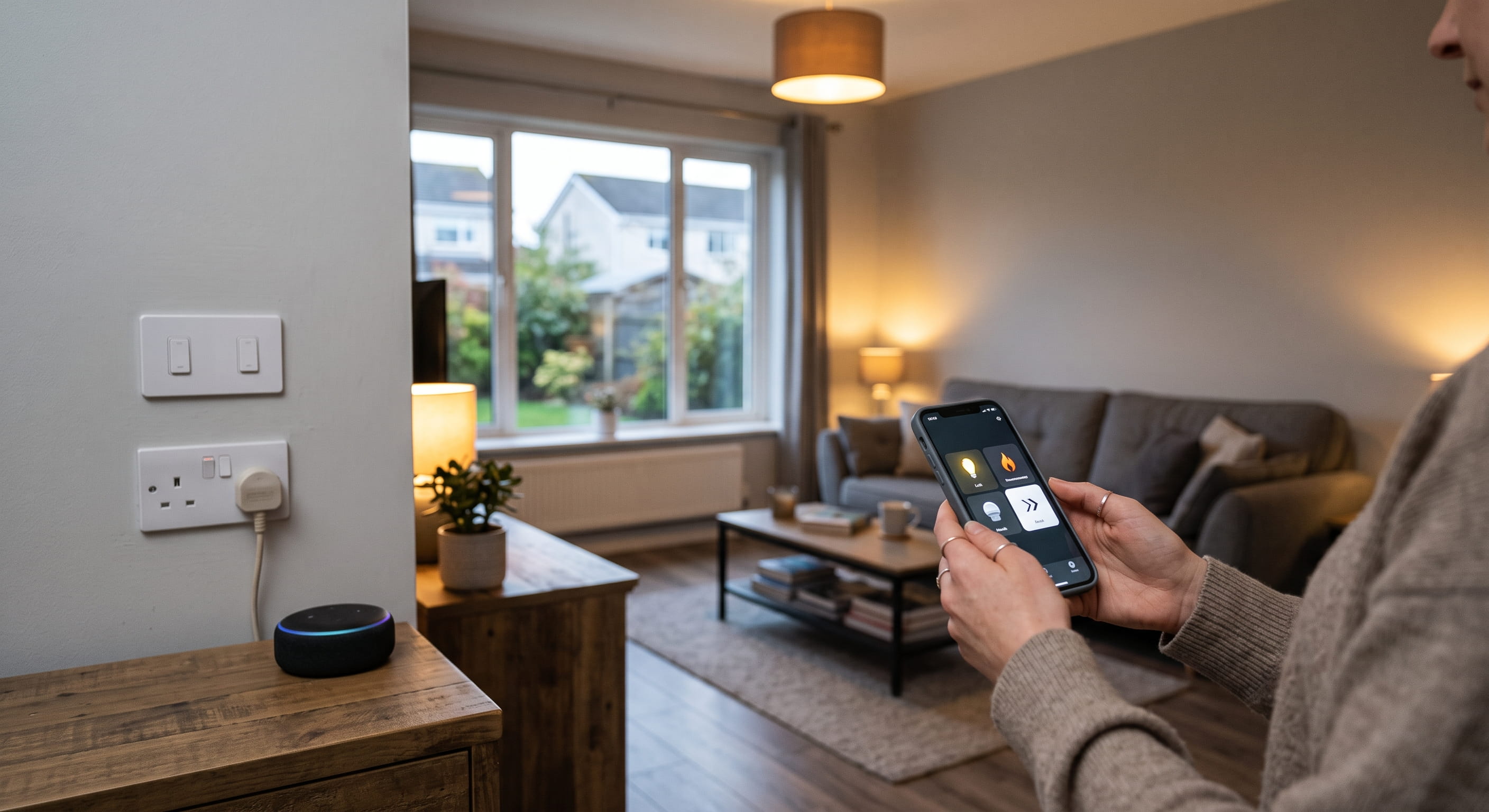
- Voice and app integration. Worth checking if it needs to sit alongside Google, Alexa or Apple devices already in the house.
Which Irish Homes Should Skip a Smart Thermostat?
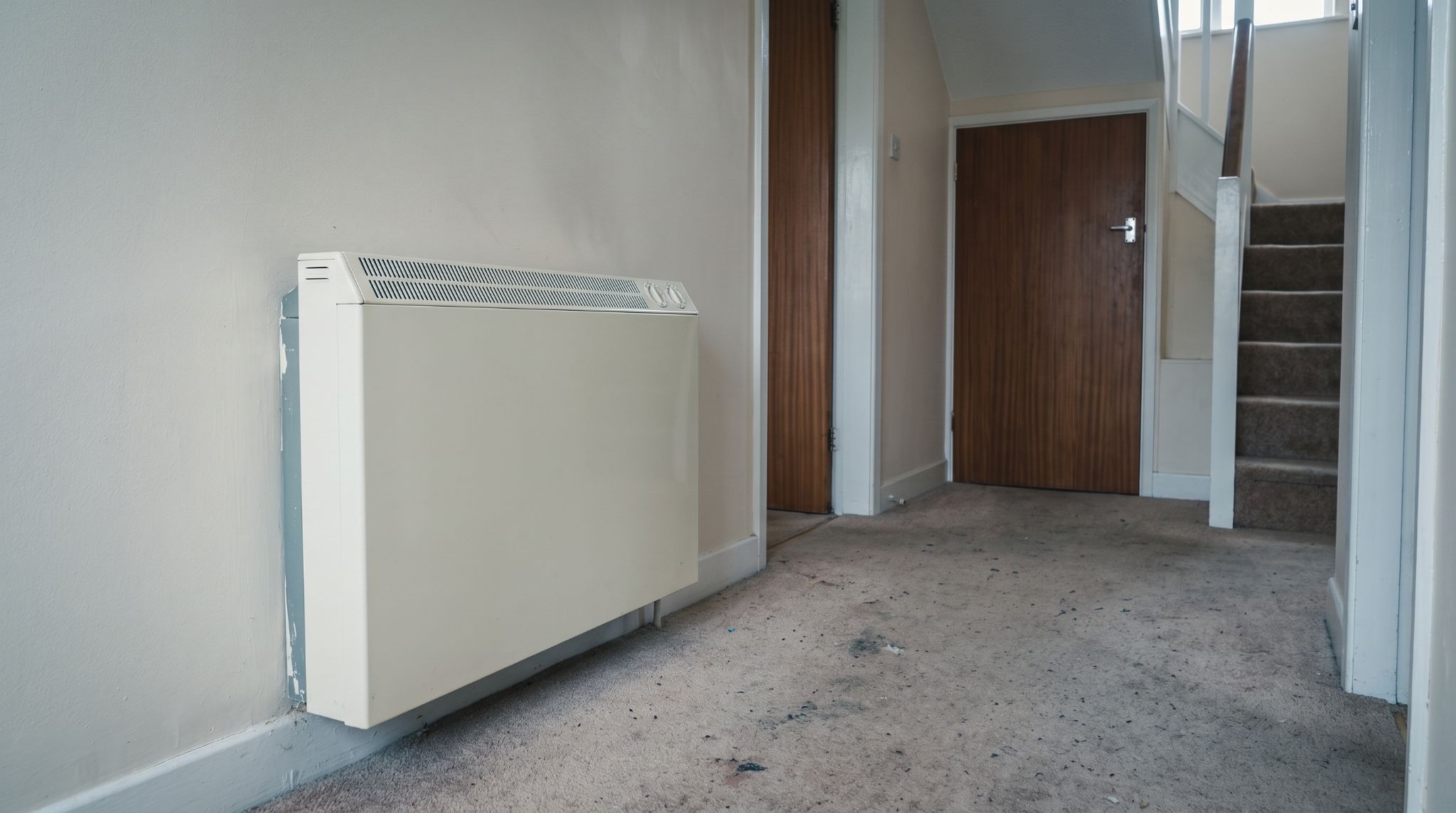
Houses on electric storage heating, apartments on a landlord-controlled or shared heating system, and homes already running a properly zoned 7-day programmer with TRVs get the least from this upgrade.
- Storage heater homes. Control sits in the heaters and the night rate tariff, so a boiler thermostat has nothing to manage.
- Poorly insulated houses. Better timing on a house losing heat through the attic saves less than fixing the attic. Insulation first, controls after.
- Rented properties. Tenants rarely get the payback back before they move, and the wiring work needs the owner's agreement anyway.
- Well-controlled systems. If your heating already runs on zones, TRVs and a schedule you rarely touch, you are buying convenience.
How to Get a Smart Thermostat Installed Properly
Installation means mains wiring at the boiler or wiring centre, so it is electrical work and belongs with a registered electrician who issues a certificate of compliance on the day.
Our team is Safe Electric registered under number A4712, and every job comes with that certificate and a warranty.
The order of work that avoids wasted money:
- Have someone look at what is actually wired at the boiler and the existing stat before you buy hardware.
- Decide the zones and whether hot water needs its own control.
- Pick the model that suits that system rather than the one with the best reviews.
- If you are claiming the grant, secure written approval before a single wire is touched.
- Have the installer commission the system and set the first schedule with you, so it is running correctly from day one.
If automated lighting or smart security is also on the list, plan it into the same visit and save paying twice for access to the same wiring.