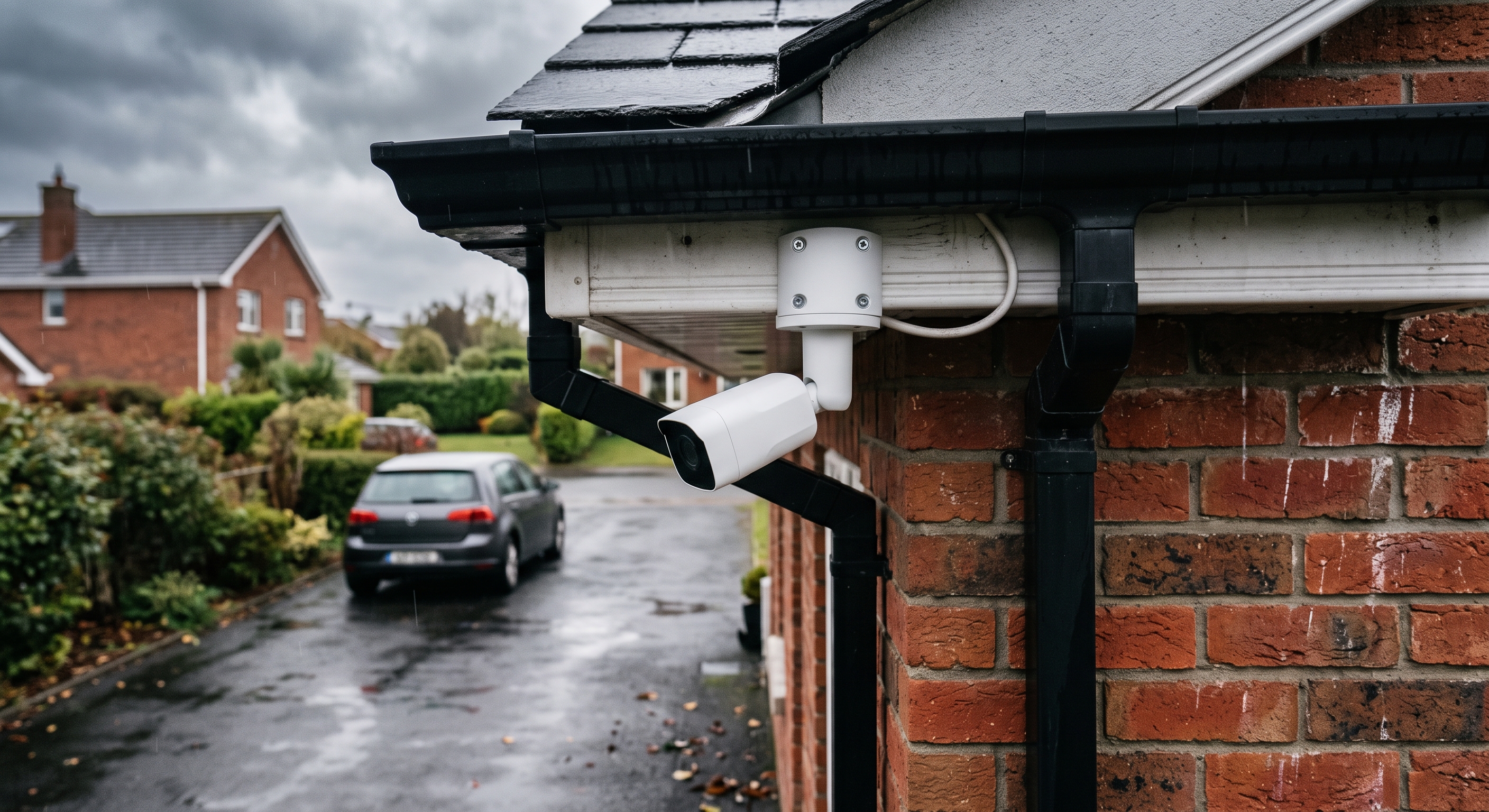
Every home in Ireland has one, but most people never think about it until something goes wrong. Your fuse board (sometimes called a consumer unit or distribution board) is the nerve centre of your entire electrical system. It sits between the electricity supply coming into your property and every socket, light and appliance you rely on daily.
Put simply, a fuse board receives the mains electricity from your meter, splits it into separate circuits and protects each one with individual safety devices. If a fault or overload occurs, the fuse board cuts power to that circuit before wires overheat or someone gets an electric shock. Modern boards use miniature circuit breakers (MCBs) and residual current devices (RCDs) instead of old rewirable fuses, making them far quicker and more reliable at preventing fires and electrocution.
Whether you're dealing with flickering lights, a board full of old-style fuses or planning a renovation, understanding how your fuse board works puts you in a much better position to keep your home safe. Let's break it down.
What Does a Fuse Board Actually Do?
Your fuse board has two jobs. First, it distributes electricity from the mains supply to individual circuits around your home, such as your downstairs sockets, upstairs lighting or cooker circuit. Second, it protects those circuits from faults.
When everything is working normally, electricity flows through the board to each circuit without interruption. But if a circuit draws too much current (an overload) or a live wire touches something it shouldn't (a short circuit), the protective devices inside the board trip and cut the power almost instantly.
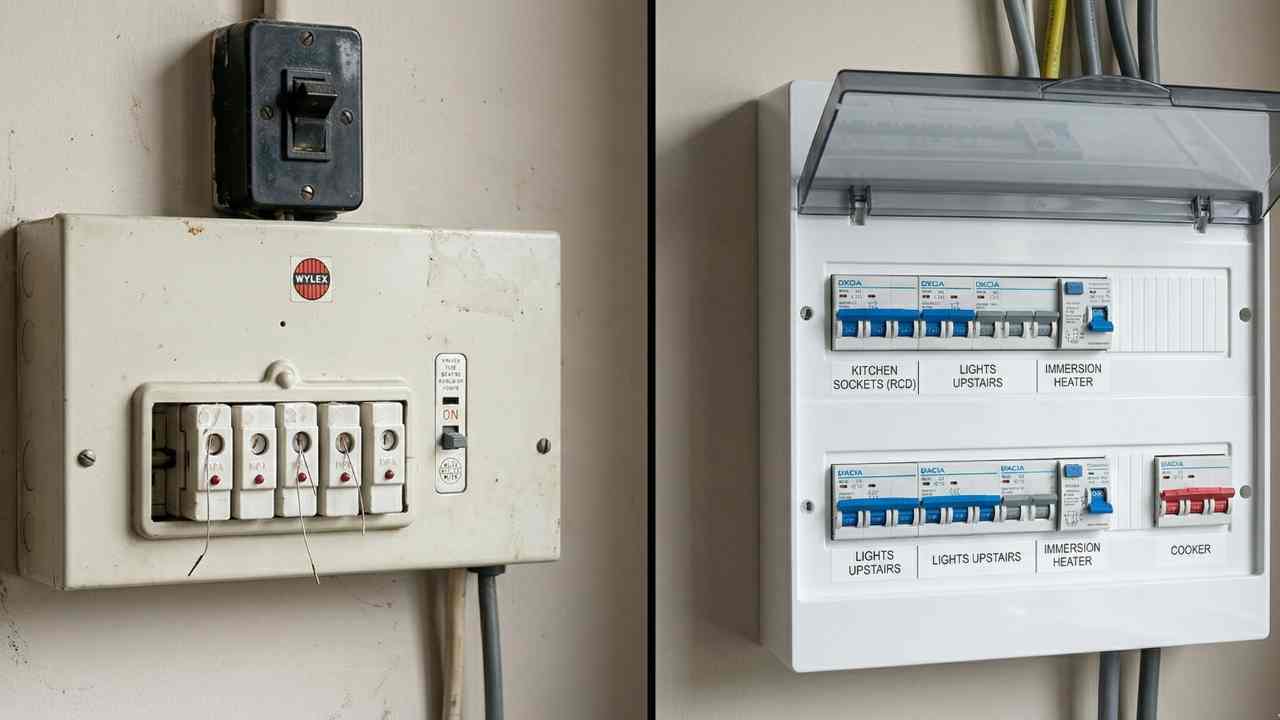
This is why a fuse board upgrade is one of the most common electrical jobs in older Irish homes. Many properties built before the 1990s still have boards that rely on rewirable fuses, which are slower to react and harder to reset than modern breakers.
What Parts Are Inside a Modern Fuse Board?
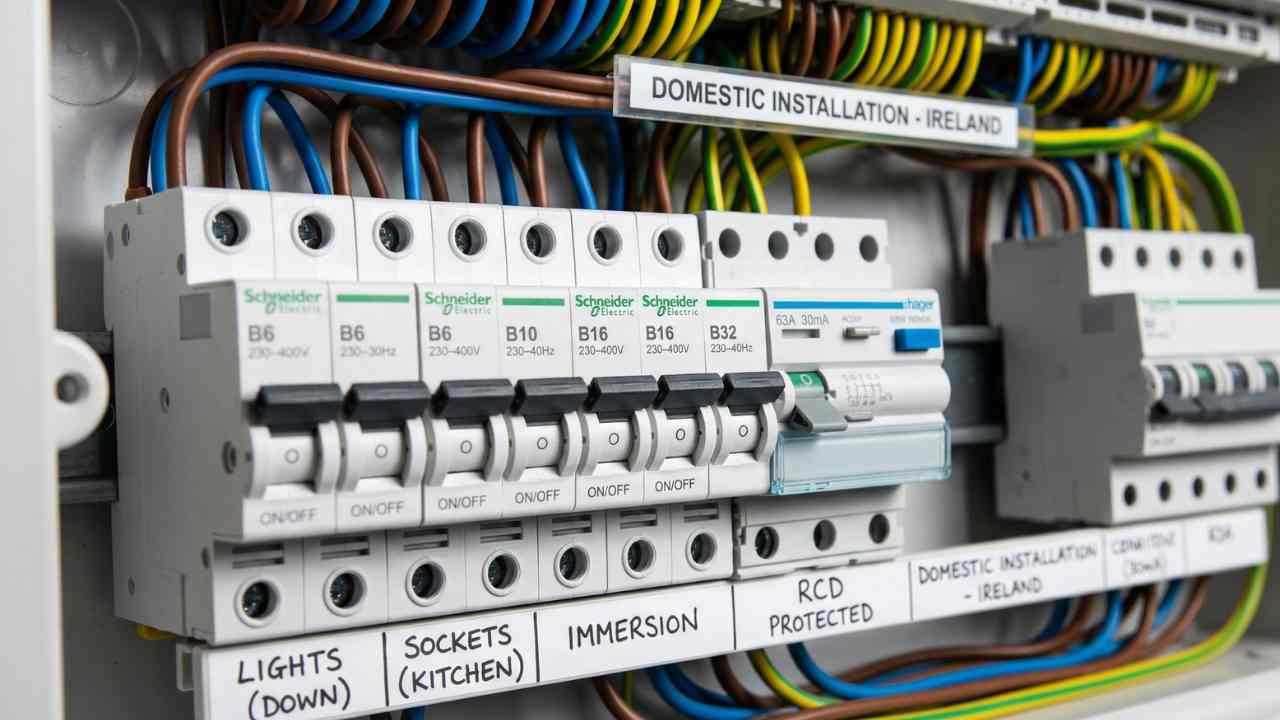
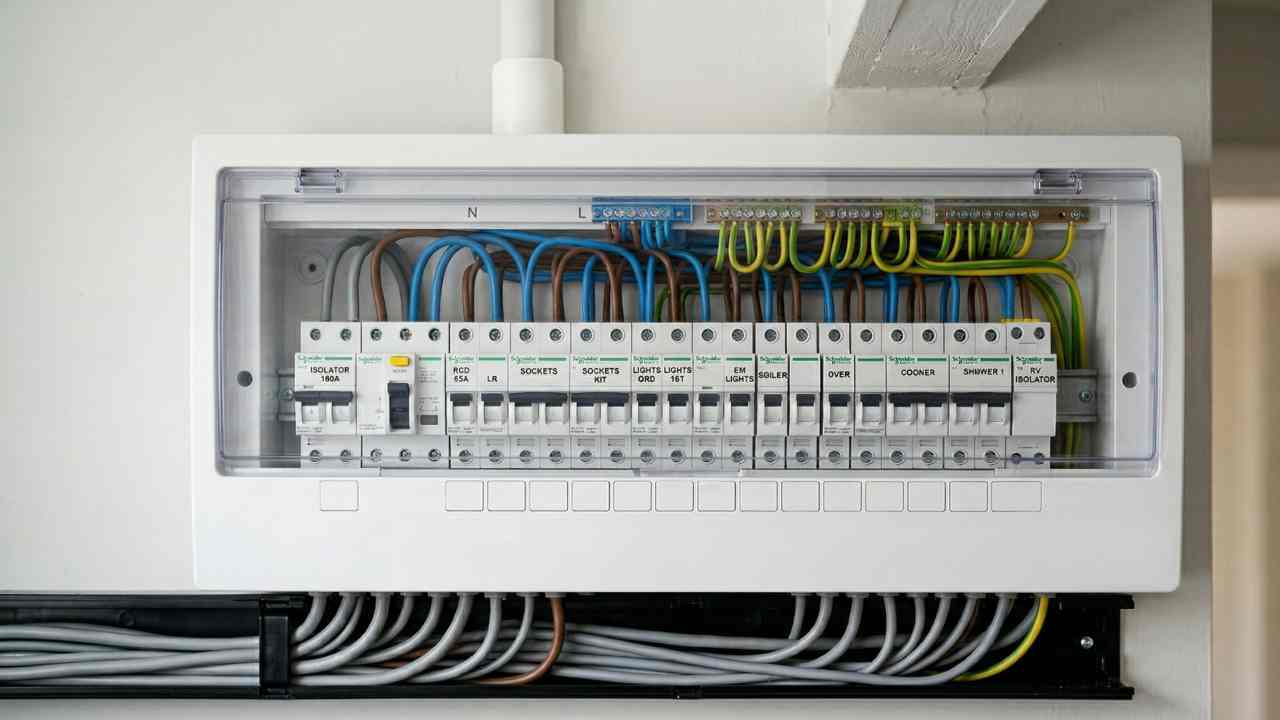
Open the cover of a modern consumer unit and you'll see a row of switches lined up neatly. Each one protects a different circuit in your home. Here's what the main components do.
Main Switch
This is the large switch (usually red) that controls the entire electricity supply to your property. Flipping it off disconnects everything at once, which is exactly what you'd do in an emergency or before any electrical work begins.
Miniature Circuit Breakers (MCBs)
MCBs protect individual circuits against overloads and short circuits. Each MCB is rated for a specific current (typically 6A for lighting, 16A or 20A for sockets, 32A for a cooker). When the current flowing through a circuit exceeds its rating, the MCB trips and you simply flip it back on once the problem is sorted.
Residual Current Devices (RCDs)
RCDs are life-saving devices. They monitor the balance of electrical current flowing out through the live wire and back through the neutral wire. If even a tiny imbalance is detected (as small as 30 milliamps), the RCD trips within milliseconds. That imbalance usually means current is leaking to earth, possibly through a person. If you're wondering how common electrical issues in homes relate to your fuse board, a faulty RCD or one that keeps tripping is often the first clue that something needs attention.
When Should You Upgrade Your Fuse Board?
Not every fuse board needs replacing, but there are clear warning signs. If you spot any of the following, it's worth getting a professional inspection.
- Your board still uses rewirable fuses or old cartridge fuses instead of MCBs.
- There are scorch marks, a burning smell or signs of overheating around the board.
- Circuit breakers trip frequently without an obvious cause.
- Your home has no RCD protection at all.
- You're adding a high-demand appliance like an EV charger or electric shower.
- Your property is being sold or rented and needs to pass an electrical inspection.
If your home was built several decades ago, the wiring and board may not meet current Irish standards set out in I.S. 10101:2020, the national rules for electrical installations overseen by the Commission for Regulation of Utilities and Safe Electric. A periodic inspection by a registered electrician will confirm whether your board is still fit for purpose.

Why Does a Fuse Board Upgrade Matter for Safety?
Older fuse boards were designed for a time when most households ran a few lights, a cooker and a washing machine. Modern Irish homes draw significantly more power, between heat pumps, EV chargers, smart home devices and multiple high-draw kitchen appliances. An outdated fuse board carries real risks if it can't keep pace with demand.
A modern consumer unit manufactured from non-combustible material (now required under Irish regulations) reduces fire risk even if a fault occurs inside the board itself. RCD protection across all circuits means any earth fault is detected and disconnected in milliseconds, not seconds. And properly rated MCBs prevent cables from overheating in the first place.
Upgrading also brings your property into compliance with current wiring rules, which matters if you're selling, renting out or insuring your home. Insurance providers increasingly ask whether electrical systems meet current standards, and a fuse board that predates RCD requirements could create headaches down the line.
How Much Does a Fuse Board Upgrade Cost in Ireland?
Costs vary depending on the size of your property, the condition of existing wiring and how many circuits you need. As a general guide, a fuse board upgrade in Ireland typically ranges from €500 to €1,400. That includes the new consumer unit, labour and a certificate of compliance. Homes that also need rewiring or significant circuit additions will be at the higher end of that range.
Always make sure your electrician is Safe Electric registered. Only a registered electrical contractor can legally certify the work and issue a completion certificate to ESB Networks. Unregistered work won't be certified, could void your insurance and may need to be redone entirely.
Keeping Your Home Protected Starts at the Fuse Board
Your fuse board might be tucked away under the stairs or behind a cupboard door, but it's doing a big job every minute of the day. If yours is outdated or showing signs of wear, getting it checked by a qualified electrician is the smartest move you can make for your home's safety.
Unique Electrical is Safe Electric registered (A4712) and has been upgrading fuse boards across Dublin, Kildare, Meath and Wicklow since 2017. With over 70 years of combined experience, free quotes, no hidden charges and a certificate of compliance with every job, it's the kind of straightforward service that makes getting this done a lot easier. Get in touch for a free quote today.