Electric vehicles are no longer a novelty on Irish roads. Walk through any housing estate in Dublin and you'll spot charging cables trailing from garages and driveways. But plenty of EV owners (and those thinking about making the switch) still rely entirely on public chargers. That's a costly habit.
Installing a dedicated home charger is one of the smartest moves you can make as an EV driver in Ireland. It cuts your running costs dramatically, removes the hassle of queuing at public stations, and can even add value to your property. With the SEAI offering a €300 grant towards installation and a typical home setup costing between €800 and €1,500 before the grant, the numbers stack up quickly.
Here are five solid reasons why getting a home EV charger installed makes sense right now.
Reason #1: Massive Savings on Running Costs
Public rapid charging in Ireland now starts at around €0.54 per kWh, and that's before you factor in monthly membership fees. Charging at home on a standard electricity tariff costs roughly €0.25 to €0.30 per kWh. Switch to a night-rate plan and you could pay as little as €0.10 to €0.15 per kWh.
For the average Irish driver covering about 15,000 km a year, that difference adds up to savings of €1,200 to €1,500 annually compared to relying on public chargers. Your home charger essentially pays for itself within four to six months.
SEAI figures show that EV drivers who do most of their charging at home spend less than half what a diesel driver pays and roughly a third of petrol costs. If you've already made the leap to an electric car, charging at home is where the real savings on EV charger costs in Ireland come from, rather than feeding coins into public networks.
Reason #2: Unbeatable Daily Convenience
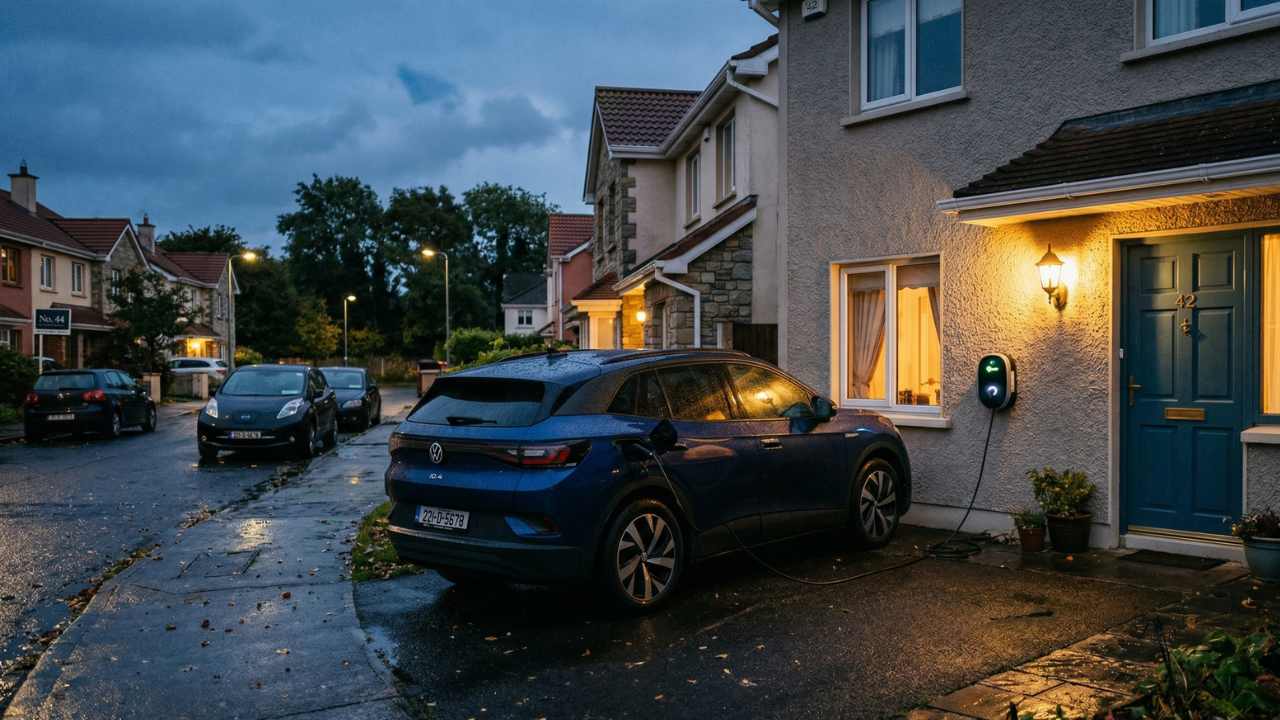
There's something genuinely freeing about plugging in your car when you get home and waking up to a full battery. No apps to check. No detours to a charging station on the way to work. No standing around in the rain waiting for a charger to free up.
With a 7.4 kW home charger (the most common setup in Irish homes), you can add around 40 to 50 km of range per hour. For most people, that means a few hours of overnight charging is more than enough for the next day's driving. You'll rarely think about range again.
Smart Charger Features Worth Knowing About
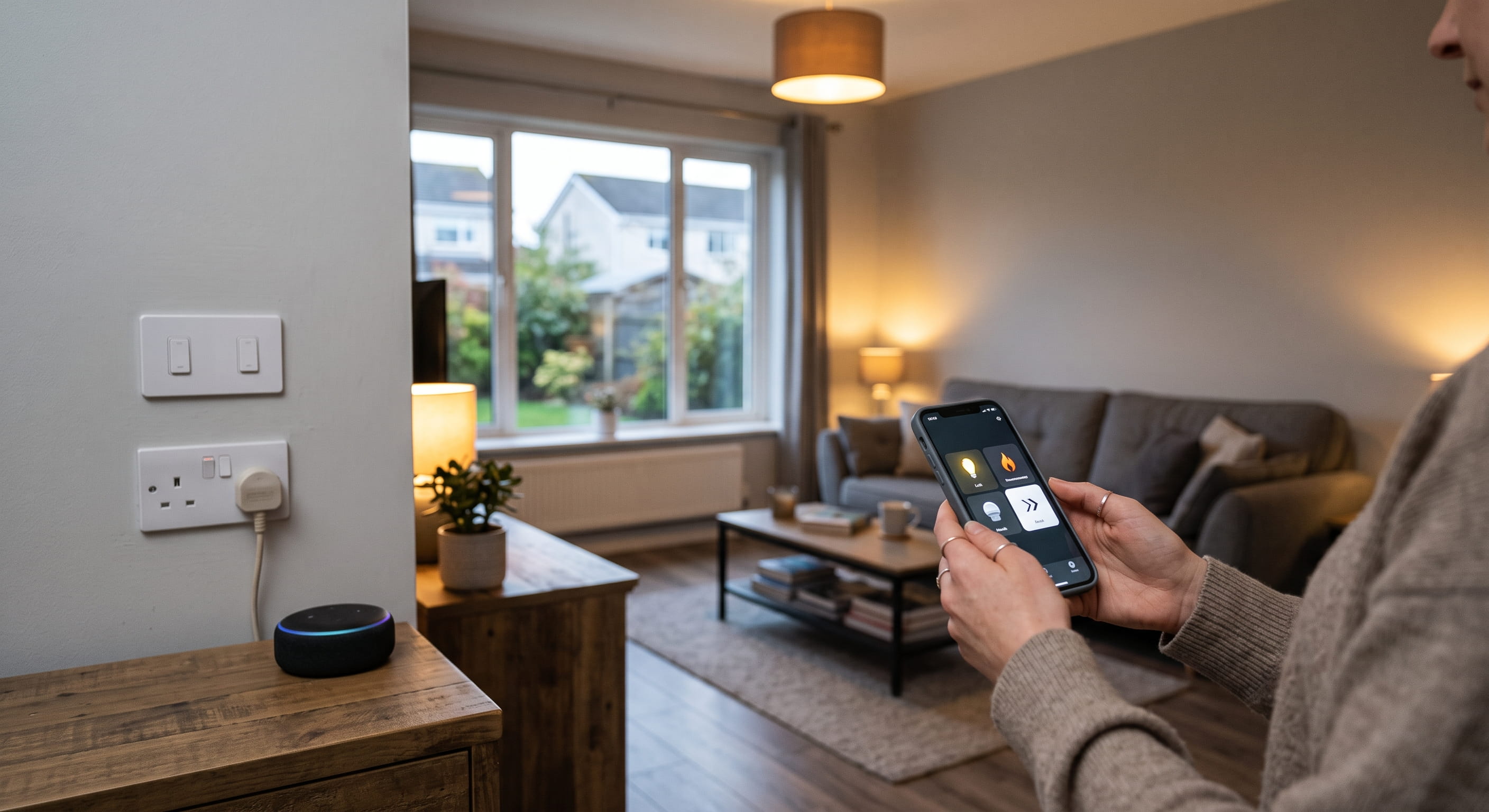
Modern smart chargers go well beyond a simple plug-and-charge setup. Most models connect to your phone via Wi-Fi, letting you schedule charging for off-peak hours automatically. Some offer energy tracking so you can see exactly what you're spending, and others include load management to prevent your home's electrical system from becoming overloaded.
If you've got solar panels (or plan to install them), many chargers can prioritise solar energy for charging. It's a setup that makes running your car almost free during summer months.
Reason #3: Safety and Compliance Done Right
Some EV owners try to save money by charging from a standard three-pin socket. It works in a pinch, but it's slow, inefficient, and not designed for sustained high loads. Over time, it can cause overheating and poses a genuine fire risk, particularly in older homes with outdated fuse boards that weren't built for modern electrical demands.
A dedicated EV charger is wired directly into your consumer unit with its own circuit and RCD protection. That means proper earthing, fault detection, and compliance with Irish wiring standards. It's the safe way to do it.
- Dedicated circuit prevents overloading your home's existing sockets and wiring.
- Built-in RCD protection cuts power instantly if a fault is detected.
- Installation by a Safe Electric registered electrician ensures full compliance with national standards.
- You receive a Certificate of Compliance (Cert 3) after installation, which is also required for the SEAI grant claim.
Getting a qualified electrician to handle the install isn't just good practice. It's a requirement if you want to claim the SEAI Home Charger Grant, and it protects your home insurance position too.
Reason #4: SEAI Grant Brings the Cost Down

The Sustainable Energy Authority of Ireland (SEAI) currently offers a €300 grant towards the purchase and installation of a home EV charger. It was reduced from €600 in January 2024, but it still takes a decent chunk off the total bill. Most homeowners end up paying between €500 and €1,200 out of pocket after the grant, depending on the charger model and how straightforward the installation is.
Eligibility is broader than most people realise. You need to be a homeowner with off-street parking, your charger must be on the SEAI Smart Charger Register, and a Safe Electric registered electrician must carry out the work. You don't even need to own an EV yet. You can install the charger before buying one, which is handy if you're planning ahead.
Once your charger is installed, you'll need a Safe Electric Certificate Number 3, a detailed invoice, and photos of the installation to submit your claim. At Unique Electrical, we handle all of that documentation as standard on every EV charger installation in Dublin we complete, so there's no paperwork headache on your end.
Reason #5: Increased Property Value and Future-Proofing
Ireland has set a target of 945,000 electric vehicles on the road by 2030. That's a serious number, and it means demand for homes with EV charging already in place is only going one direction. A visible charger on your driveway wall is a genuine selling point for buyers, just as a modern fuse board or energy-efficient heating system adds to a property's appeal.
Even if you're not planning to sell anytime soon, installing a charger now means you're set up for the future. As public charging costs continue to rise and more household members switch to EVs, having the infrastructure already in place saves hassle and expense down the line.
For older homes, an EV charger installation is also a good opportunity to have your consumer unit assessed. Around 20% of Irish homes built before 2000 may need a fuse board upgrade to safely support a 7 kW charger, which typically costs an additional €300 to €600.

Ready to Get Started?
A home EV charger is one of those upgrades that pays for itself fast and makes daily life easier. Whether you've already got an electric car or you're getting ready for one, now is a good time to get the charger sorted while the SEAI grant is still available.
Unique Electrical is Safe Electric registered (Reg. #A4712) and our team has over 70 years of combined experience. We provide free quotes, transparent pricing with no hidden charges, and a certificate of compliance and warranty with every job. Contact us today on (01) 697 1995 or visit uniqueelectrical.ie for a free quote.