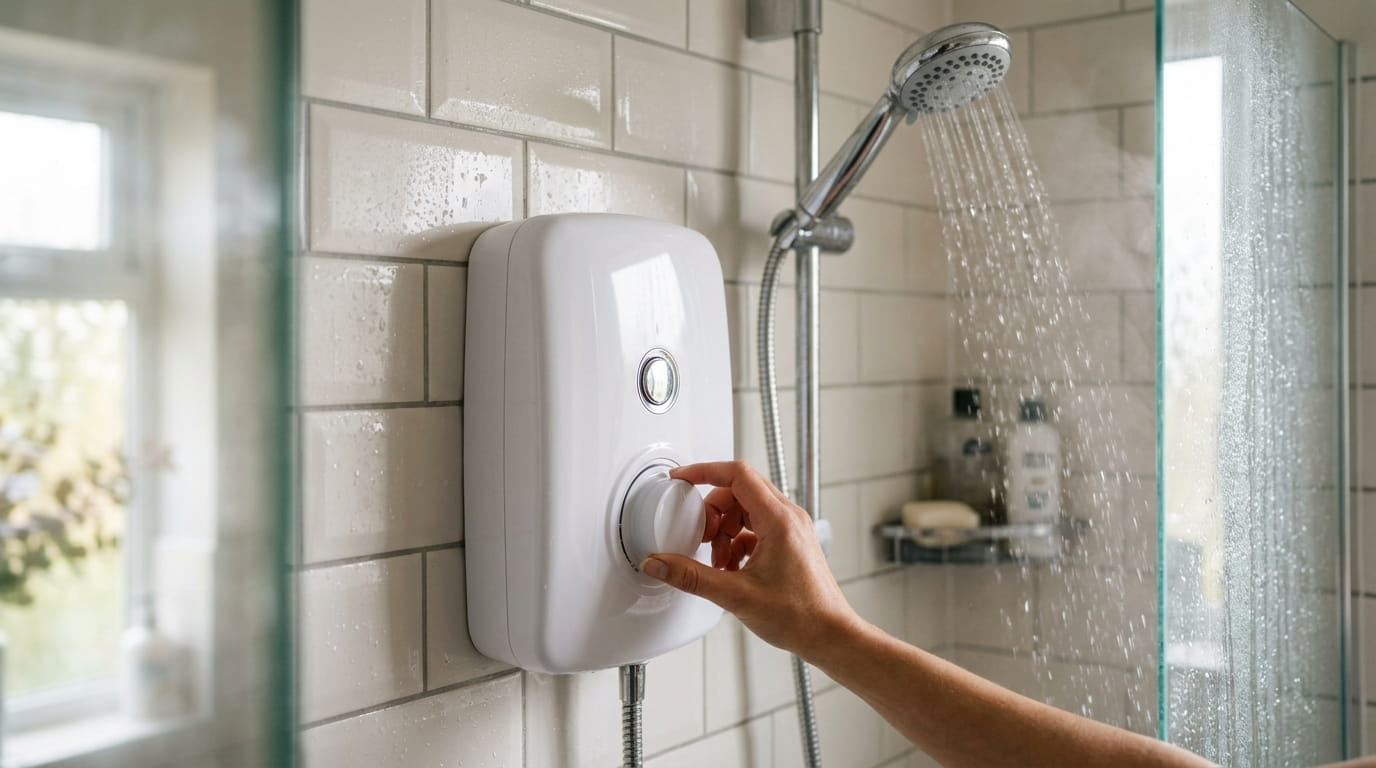
An electric shower not working usually comes down to a few common faults. The major ones are a tripped fuse board, a blocked shower head and stuck valves. Some of these are quick fixes you can do yourself. Others need a registered electrician.
This guide goes through the faults one by one. It starts with the easy checks. Then it covers the parts inside the unit that need a professional. It also explains who is allowed to open the unit in Ireland, because the law here is strict.
Electric Shower Not Working? 5 Common Causes at a Glance
Most electric shower faults come from one of the five things below. Here is how the common symptoms match up.
1. No power, no light on the unit
Likely cause: tripped fuse board, blown isolator fuse, worn pull cord
What to do: reset the breaker once, then call an electrician
2. Water runs but stays cold
Likely cause: heating element or thermal cut-out
What to do: electrician only
3. No water, unit still has power
Likely cause: stuck valve, blocked head or filter
What to do: clean the head and filter, then call a pro
4. Keeps tripping the fuse board
Likely cause: water in the unit or a failed element
What to do: stop using it, call an electrician
5. Water keeps running after switch-off
Likely cause: valve not closing
What to do: turn off the power, then call an electrician
One rule matters more than the rest. If the shower keeps tripping the fuse board, or water keeps running after you switch it off, stop using it. Turn off the power at the pull cord or isolator switch. Both faults can become dangerous if left running.
5 Safe Checks to Try First Before You Call Anyone
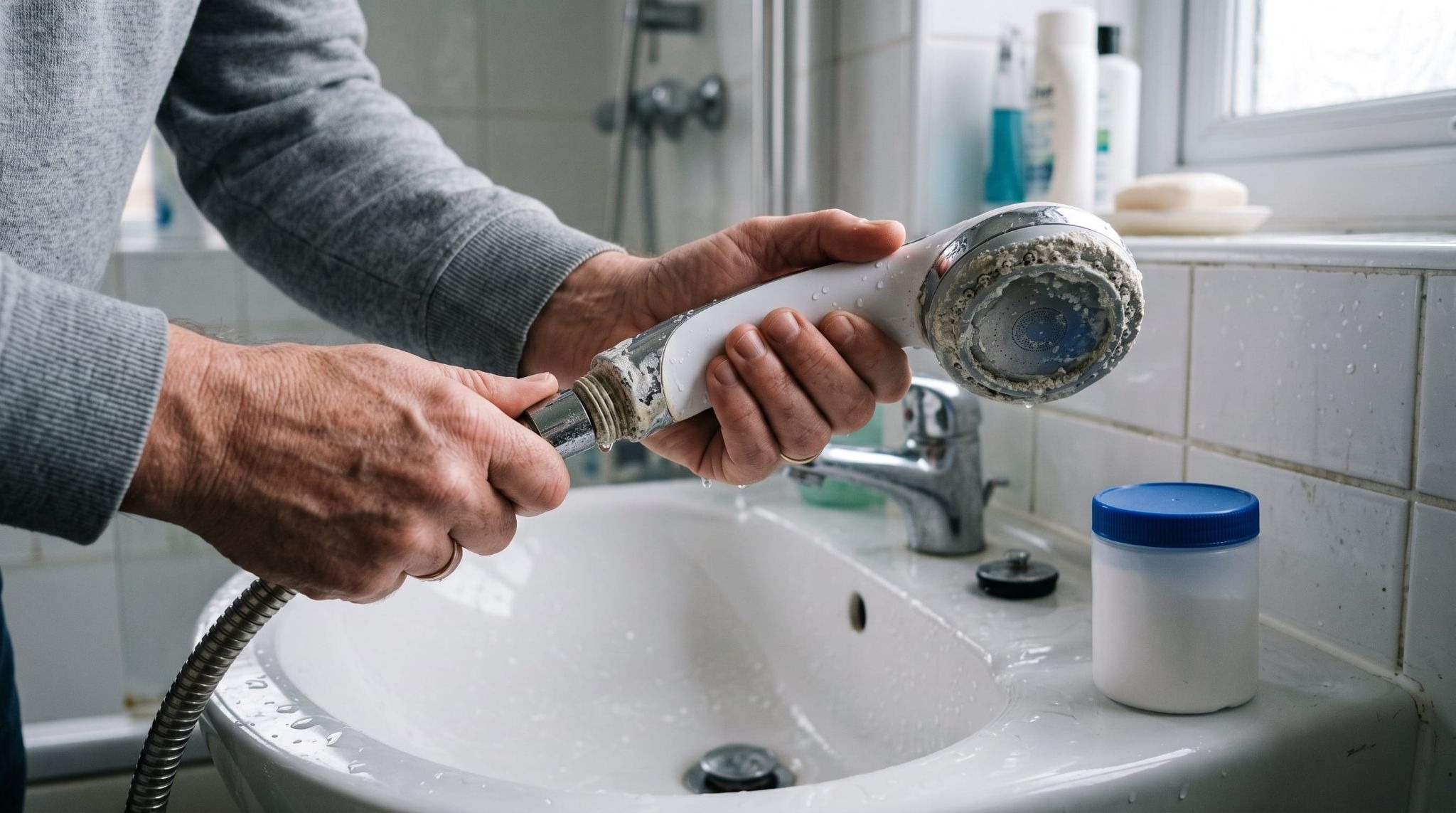
Many electric shower problems are not inside the unit at all. Power trips, limescale, and water supply issues cause a lot of them. You can rule these out yourself in a few minutes. Run these checks first. They fix the simple cases and save you a call-out fee.
1. Check the fuse board. Showers use a lot of power, so a surge can trip the breaker. Reset it once. If it holds, you are sorted. If it trips again, stop there.
2. Check the isolator or pull cord. If the light on the unit will not come on, power is not reaching the shower. A blown fuse or a worn pull cord switch is often the cause.
3. Clean the shower head. Limescale blocks the holes and weakens the flow. Weak flow can also trigger the overheat cut-out. Unscrew the head, soak it in descaler, and clear the holes.
4. Check the water supply. Make sure the stopcock is fully open. Run other taps to see if they are normal. Very low pressure can stop the shower from starting at all.
5. Watch for hot and cold swings. Water that goes hot then cold points to poor flow, often from limescale inside the unit.
If none of these bring the shower back, the fault is inside the unit. That is where you stop and a qualified electrician takes over.
No Water Coming Out of Your Electric Shower? Try This First
No water coming out of the electric shower while the unit still has power usually means a blockage or a stuck valve. The shower is getting electricity, so the fault is in the water path. That path runs from the mains supply to the shower head.
Work through the likely causes in this order:
- Blocked shower head or hose. Limescale and dirt build up in the head over time. This is the first thing to clean and the most common quick fix.
- Clogged inlet filter. Many units have a small filter where water enters. Grit and scale block it and slow the flow.
- Low mains pressure. Electric showers need a minimum flow to run. If pressure is weak across the whole house, the unit may not start.
- Stuck solenoid valve. This valve opens to let water in when you switch on. If it sticks shut, no water flows even though the unit has power. This part is inside the unit.
If the head, hose, and filter are all clear and there is still no water, the valve is the likely cause. That repair means opening a live unit, so do not try it yourself.
What to Do If Electric Shower Not Heating or Running Cold
An electric shower not heating means water is flowing but the heating side has failed.
The two usual causes are a burnt-out heating element or a tripped thermal cut-out. Both stop the water from warming up. Both sit inside the unit.
Burnt-out element
A burnt-out element is the most common fault on an older shower. The element heats the water as it passes through. After years of use it wears out, and hard water speeds this up.
When it fails, you get cold water only. Replacing the element is the usual fix. On an older unit, a full replacement can be better value.
Thermal cut-out
A thermal cut-out is a safety part. It shuts off the heat after the unit overheats. If your electric shower has no hot water and the cut-out has tripped, something caused the overheating first.
Weak flow or a blocked head is often the reason. Fix that first, or the cut-out will just trip again.
If the element has burnt out on an older unit, replacing the whole shower often makes more sense than repairing it. The cost to install electric shower units depends on the model, the cable run, and the state of the existing supply.
Why an Electric Shower Keeps Tripping the Fuse Board
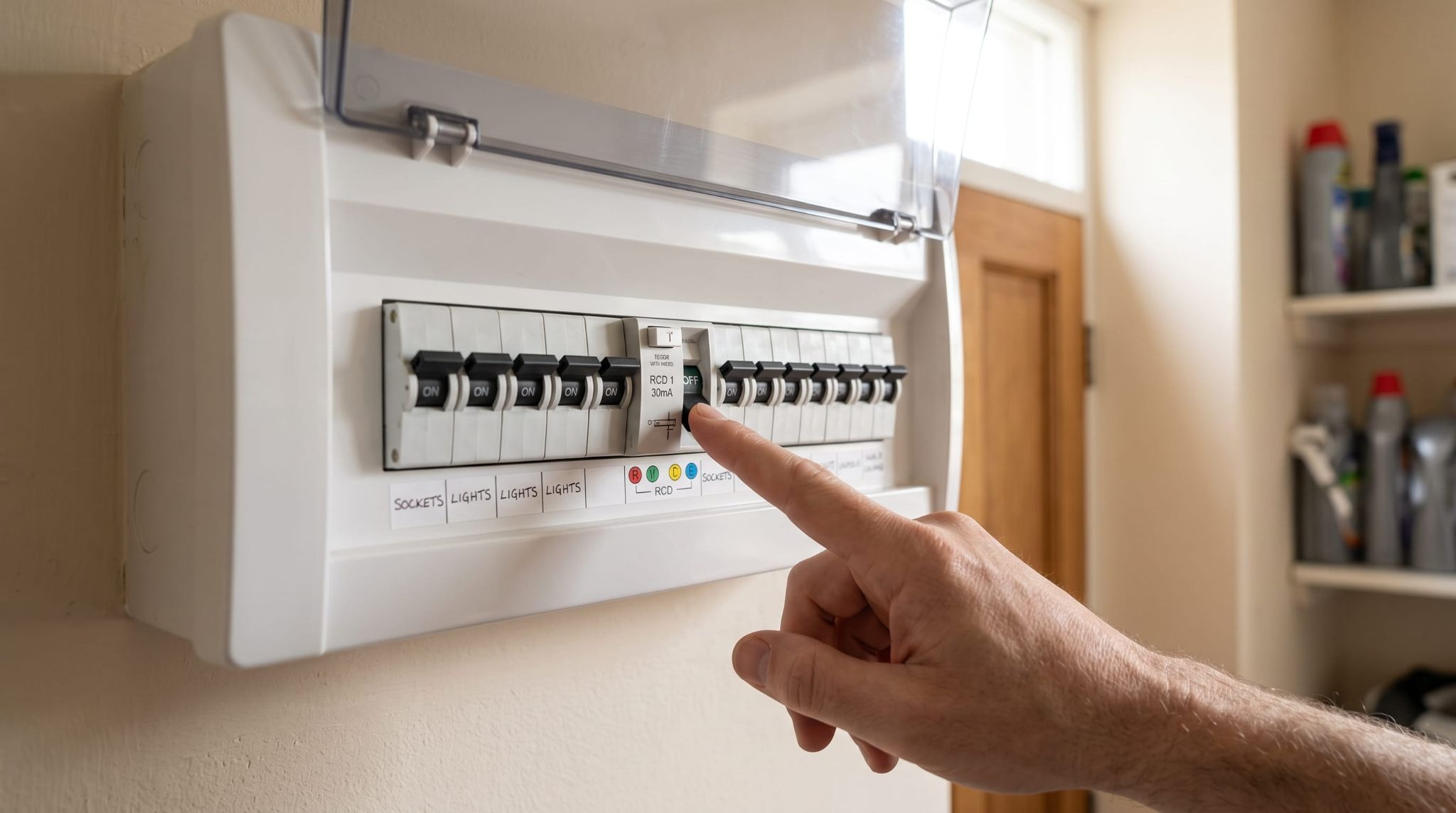
An electric shower that keeps tripping the fuse board has an electrical fault. Treat it as a safety issue. The RCD trips to protect you. Resetting it again and again removes that protection while the fault is still there.
The usual causes are serious. Water has got into the unit or the wiring. The heating element has broken down inside. Or a connection has come loose under the heavy load a shower draws. Each of these can send current where it should not go.
If one reset holds and it never trips again, it may have been a one-off surge. If it trips on the next use, switch the shower off at the isolator and leave it off.
Do not test it by trial and error near running water. Under the rules set by the Commission for Regulation of Utilities, this restricted work must be done by a Registered Electrical Contractor.
When to Call a Registered Electrician for an Electric Shower
Call a registered electrician for any fault inside the unit, any repeat tripping, or any sign of water near the electrics. In Ireland, work on the wiring and internal parts of an electric shower is restricted by law. It is not a job for a general handyman.
A proper quote should come after an inspection, not over the phone. A professional electric shower installation also covers safe isolation, the right cable size, RCD protection, and the completion certificate.
If your shower is dead after one reset, keeps tripping, or will not heat, get in touch for a free quote and a same-day response from a qualified electrician.